Your pool's water level keeps dropping. Is it normal evaporation or a leak that needs repair? Learn the bucket test and signs to watch before calling for help.
Share:

Summary:
You checked your pool yesterday. Today the water line’s noticeably lower. Again.
It’s a familiar frustration for Broward County pool owners. You’re refilling more often, your water bill’s creeping up, and you’re wondering if something’s seriously wrong. The question keeping you up: is this normal evaporation or a leak that’s about to cost you thousands?
Here’s what you need to know before panicking or calling for major pool repair. Florida pools lose water differently than pools anywhere else. And knowing the difference between normal water loss and an actual leak can save you from unnecessary stress and a hefty repair bill you might not even need.
Let’s start with what’s real. Your pool is supposed to lose water. Every single day.
In Broward County’s climate, a pool typically loses about a quarter inch of water daily just from evaporation. That’s normal. On particularly hot, dry, or windy days, you might see closer to half an inch disappear. Over a week, that adds up to one to one-and-a-half inches during summer months.
If you’re losing more than an inch per day, that’s when you should start paying attention. But even then, context matters. Did you just host a pool party? Kids splashing around displace water. Running your filter on backwash? That drains water too.

Florida isn’t kind to pools. The same sunshine and warmth that makes year-round swimming possible also accelerates water loss in ways most pool owners don’t realize.
UV rays break down chlorine up to 40% faster here than in cooler climates. That means more chemical treatments, more frequent adjustments, and more water cycling through your system. The afternoon thunderstorms that roll through Broward County dump rainwater into your pool, diluting chemicals and throwing off your pH balance. Then the humidity creates the perfect environment for algae to bloom seemingly overnight.
Your pool works harder here. It’s running nearly year-round instead of closing for winter like northern pools do. The equipment doesn’t get a break. Pool pumps that would last 10-12 years in cooler climates often need pool pump repair or replacement closer to the 8-year mark in Florida. The surface takes constant UV punishment. And that sandy Florida soil underneath? It shifts. Over time, that movement can create tiny cracks you won’t see until they become bigger problems.
Temperature fluctuations play a role too. Even though we don’t see dramatic seasonal changes, the difference between daytime heat and nighttime cooling causes expansion and contraction in pool materials. This is one reason pool replastering becomes necessary every 7-15 years depending on your surface type and maintenance. Add saltwater systems into the mix, and you’ve got corrosion working on equipment faster than in freshwater pools.
This is why leak detection matters more in Broward County than almost anywhere else. What starts as a hairline crack in your plaster can turn into a structural issue within months, not years. The warm, wet environment doesn’t give you the luxury of time that colder climates do. Professional pool maintenance catches these issues early, before they escalate into expensive pool repair projects.
Before you call anyone or spend a dime, run this simple test. It takes five minutes to set up and 24 hours to get your answer.
Grab a five-gallon bucket. Fill it with pool water about three-quarters full. Place it on your pool steps so the bucket is partially submerged but the rim stays above water. Mark the water level inside the bucket with a piece of tape or waterproof marker. Then mark the pool’s water level on the outside of the bucket.
Leave everything alone for 24 hours. Don’t add water. Don’t run the backwash. Just let it sit.
When you check back, compare the two water levels. If the pool water and bucket water dropped by the same amount, you’re looking at evaporation. That’s normal. But if the pool water level dropped more than the water inside the bucket, you likely have a leak somewhere.
The beauty of this test is its simplicity. You’re creating a controlled comparison. The bucket water experiences the same sun, wind, and humidity as your pool water. The only difference is that the bucket doesn’t have plumbing, fittings, or a shell that could leak. So if your pool loses more water than the bucket, something else is going on.
Run this test with your pump both on and off if you want to narrow down the source. A leak that only happens when the pump runs usually points to a plumbing issue or a problem with your pool pump that needs repair. A leak that continues whether the pump is on or off suggests a structural problem with the shell itself, possibly requiring pool resurfacing or crack repair.
This test won’t tell you where the leak is or how to fix it. But it will tell you whether you’re dealing with normal water loss or something that needs professional attention. And that knowledge alone can save you from unnecessary worry or help you act quickly before a small leak becomes a major pool repair.
Want live answers?
Connect with a DCP Pool Services expert for fast, friendly support.
Not every drop of missing water requires a service call. But some signs shouldn’t be ignored.
If you’re adding more than two inches of water per week, something’s off. If you notice wet or mushy spots in the grass around your pool or pool deck, that’s water going somewhere it shouldn’t. Cracks in the pool deck or tiles that weren’t there before often signal underground movement caused by leaking water washing away the soil beneath.
Your chemical levels can tell you a lot too. When water leaks out, it takes your carefully balanced chemicals with it. If you’re constantly adjusting pH and chlorine levels but can’t seem to keep them stable, a leak might be the culprit. This is especially true if you’ve recently had pool maintenance and the technician confirmed your equipment is functioning properly.
Leaks don’t just happen randomly. There are common culprits, and understanding them helps you spot problems early.
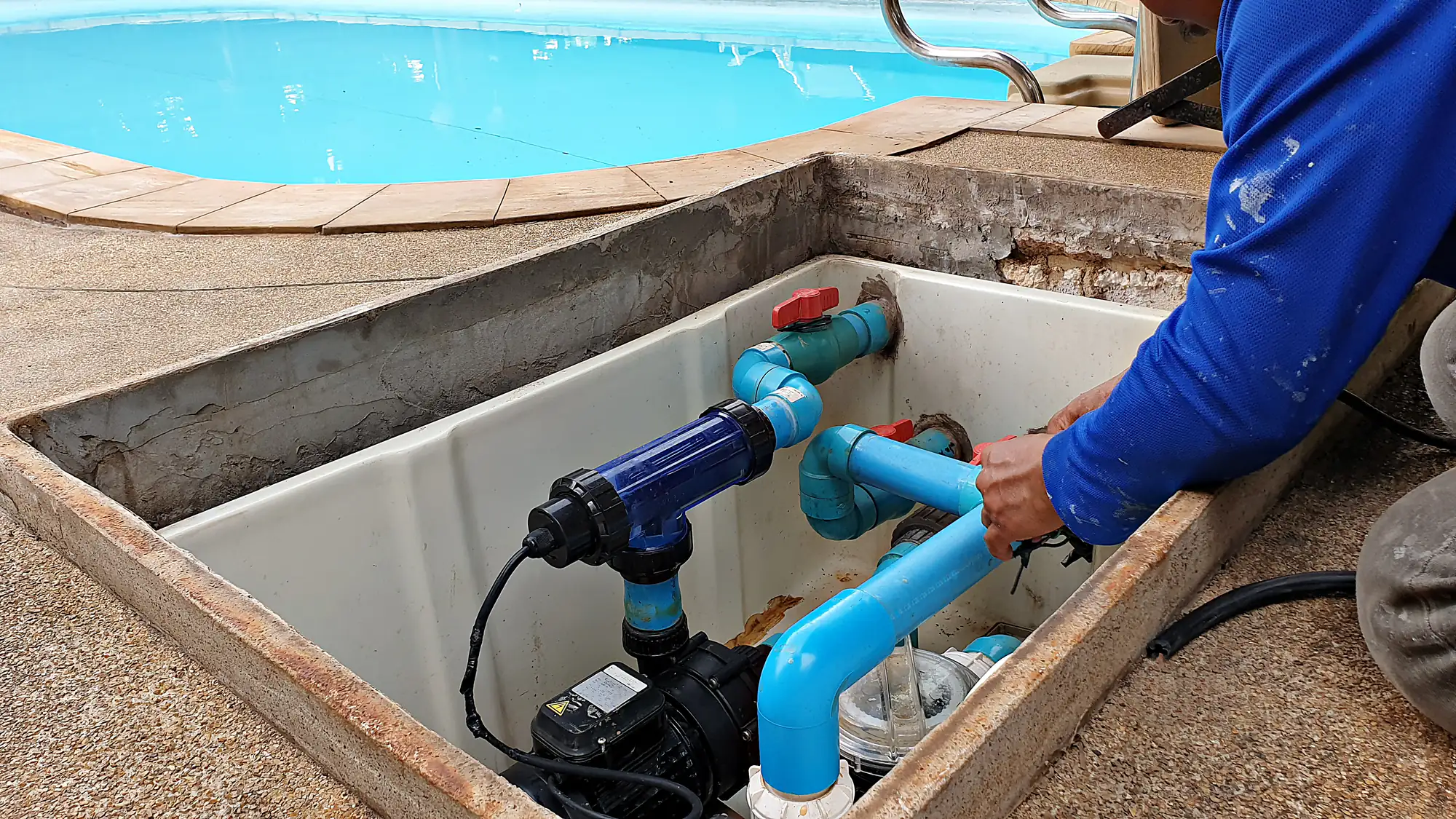
Plumbing lines are the usual suspects. Underground pipes can crack from soil movement, tree roots, or simple age. Fittings loosen over time. Seals deteriorate, especially in Florida’s heat and humidity. If you have an older pool built before modern codes, those pipes might not have been designed to handle decades of constant use. Pool pump repair often uncovers plumbing issues that were contributing to water loss without obvious signs at the equipment pad.
Skimmers and return jets are another weak point. The seal where these fixtures meet the pool shell can fail. You’ll often see cracks forming around the edges or notice the tile pulling away. Light niches are particularly prone to leaks because they penetrate the shell and rely on a watertight seal that can degrade over time.
The pool surface itself can develop cracks. That intense Florida sun we talked about earlier doesn’t just evaporate water. It heats and cools the plaster, causing expansion and contraction. Over years, this creates stress fractures. Small cracks become bigger cracks. Bigger cracks eventually penetrate through to the shell, making pool replastering not just cosmetic but necessary to maintain structural integrity.
Equipment can leak too. Pool pumps develop seal failures. Pool heater installation connections can loosen over time, especially if the original install wasn’t done to current standards. Filter housings crack. These are usually easier to spot because you’ll see water pooling around the equipment pad. But underground plumbing leaks? Those can go unnoticed for months while they silently wash away the soil supporting your pool structure and deck.
Here’s what makes Broward County different: that sandy soil doesn’t just shift, it erodes quickly when water flows through it. A small plumbing leak in Michigan might take years to cause structural issues. The same leak here can create settlement problems in months, affecting everything from your pool deck to your coping. The warm, wet environment accelerates everything, including deterioration.
This is why early detection matters so much. A crack caught early might cost $400 to $800 to repair with injection methods. That same crack ignored for a year or two can compromise your shell and turn into a $5,000 to $15,000 problem requiring major pool repair and possibly complete pool replastering.
Sometimes the bucket test confirms you have a leak, but you still can’t find it. That’s when professional leak detection becomes worth every penny.
Professional technicians use equipment you don’t have access to. Pressure testing isolates which plumbing line is leaking without digging up your entire yard. Electronic listening devices pick up the sound of water escaping underground. Dye testing shows exactly where water is pulling through cracks you can’t see with the naked eye. Some companies even use underwater cameras to inspect the pool shell and fittings.
Professional leak detection in Broward County typically involves a standard diagnostic fee, which varies based on the size of your pool and the complexity of your system. That might feel steep until you consider what you’re avoiding. Trying to find a leak yourself often means guesswork, wasted time, and potentially making things worse by digging in the wrong spot or attempting repairs without proper training.
Certified Pool/Spa Operators bring industry-leading expertise to the process. They understand how Florida pools behave, what fails first, and where to look based on your pool’s age, construction type, and symptoms. This certification ensures they’re following best practices for both detection and repair, which matters when you’re dealing with something as important as your pool’s structural integrity.
Most leak detection services can find and often fix common leaks in a single visit. Many simple repairs, like sealing a crack or replacing a gasket, can be done on the spot without draining your pool. You’re looking at same-day resolution for issues that seemed mysterious an hour earlier. More complex issues, like underground plumbing leaks or structural cracks requiring pool replastering, get diagnosed accurately so you know exactly what you’re facing and what it will cost.
The real value isn’t just finding the leak. It’s preventing the damage that leak would cause if left alone. Water escaping your pool doesn’t just disappear. It goes into the ground around your pool, saturating soil, creating voids, and potentially undermining your deck and coping. Over time, this leads to settling, cracking, and structural issues that cost exponentially more to fix than the original leak. What starts as a minor leak repair can become a major pool deck remodeling project if water damage goes unchecked.
When should you call? If your bucket test shows a leak and you can’t visually identify the source within a few minutes of inspection, call. If you’re losing more than an inch of water daily, call. If you see unexplained wet spots, sinking deck sections, or cracks appearing in your pool finish, call. If your water bill has jumped without explanation or your pool heater installation seems to be running more than it should to maintain temperature, call.
Don’t wait for the problem to announce itself with a collapsed deck or a pool that won’t hold water. Professional leak detection is preventative maintenance that pays for itself by catching issues while they’re still manageable. And in Broward County’s challenging environment, manageable problems can become major pool repair projects faster than you’d expect.
Your pool is an investment. Not just in money, but in your property value, your family’s enjoyment, and your quality of life.
Understanding normal water loss versus actual leaks puts you in control. The bucket test gives you answers in 24 hours. Knowing what to watch for helps you catch problems early. And recognizing when to call professionals with proper certifications and local expertise saves you from turning a small fix into a large disaster.
Florida’s climate doesn’t give you room for “wait and see.” The environment that makes year-round swimming possible also accelerates every form of pool deterioration, from surface cracks requiring pool replastering to equipment failures needing pool pump repair. But that same reality makes professional pool maintenance and leak detection more valuable here than almost anywhere else.
If you’re dealing with water loss, unexplained chemical imbalances, or any of the warning signs we’ve covered, we bring Certified Pool/Spa Operator expertise and local Broward County knowledge to every job. We provide upfront pricing, flexible scheduling, and a satisfaction guarantee on everything from leak detection to pool repair. You’ll get straight answers about what you’re dealing with and exactly what it takes to fix it right.
Article details:
Share:
Continue learning: