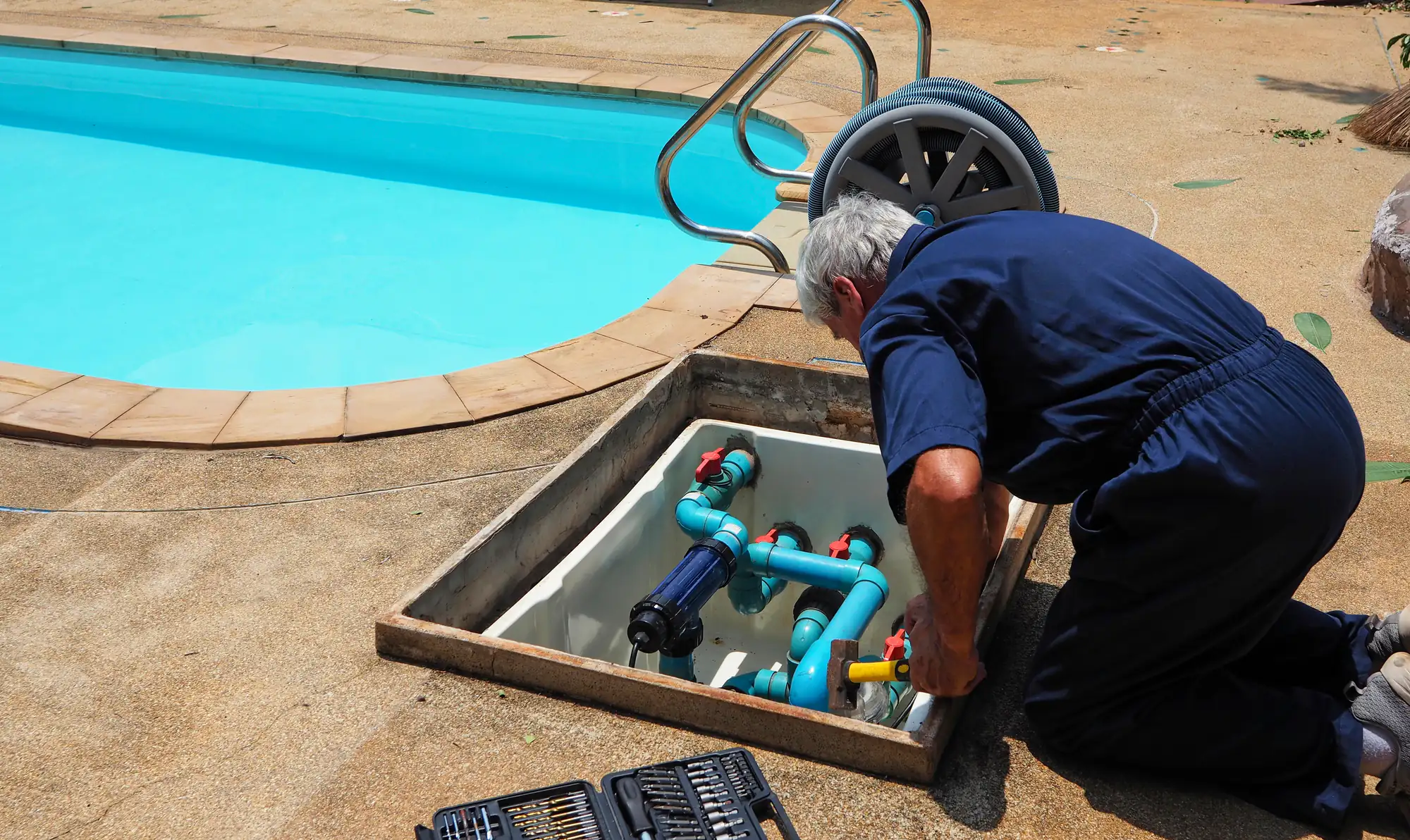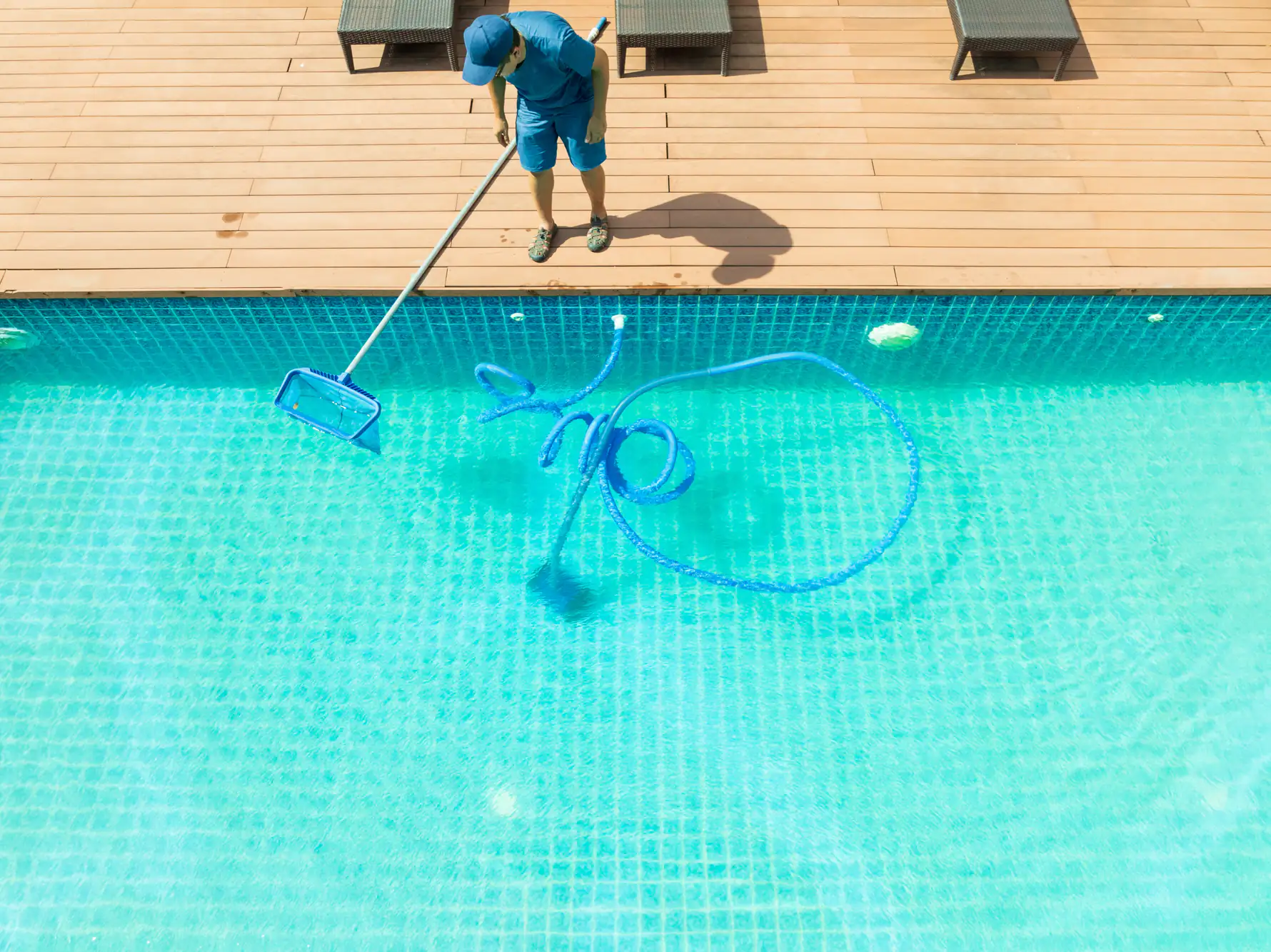
Smart pool upgrades and timely pump repair can make or break your summer. Here's what Broward County homeowners need to know before the season hits.
Share:
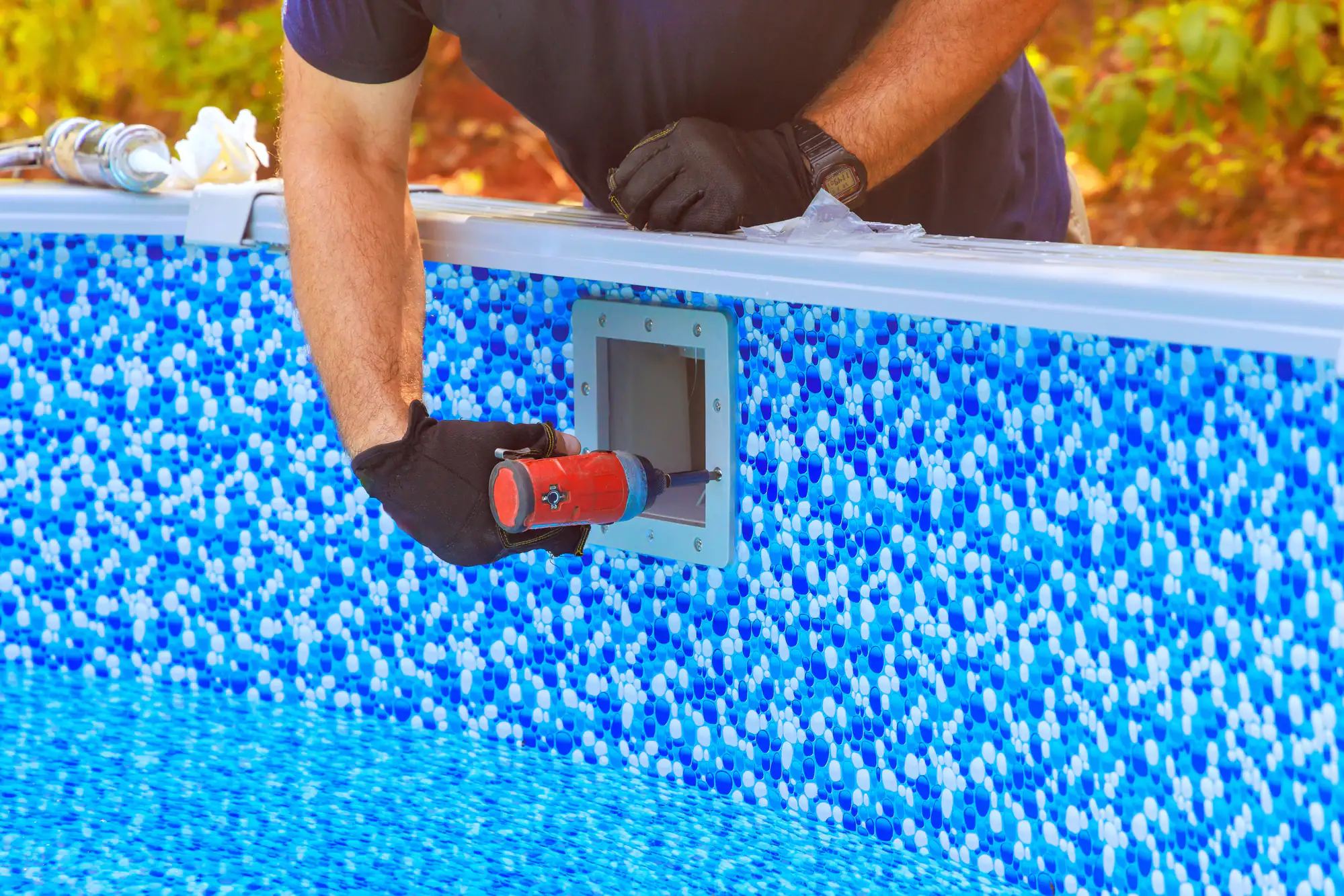
Summary:
You’ve got a vacation coming up, a backyard pool you actually want to use, and somewhere in the back of your mind — a nagging feeling that your pump hasn’t sounded quite right lately. Summer is peak season for pool pump failures in South Florida, and Broward County’s year-round heat, humidity, and storm exposure make equipment wear happen faster here than almost anywhere else in the country. This page will walk you through what’s actually worth fixing, what’s worth upgrading, and how a little attention now can keep your pool clean, your family happy, and your summer plans intact.
Most of the country shuts their pools down for five or six months a year. Here in Broward County, your pump runs every single day — through hurricane season, through the rainy season, through the kind of heat and UV exposure that degrades seals, corrodes metal components, and pushes motors to their limits year-round. That’s roughly twice the operational hours of a pump in a northern climate, which means wear accumulates faster and failure tends to show up earlier than the national averages suggest.
Broward County also sits squarely in Florida’s hurricane belt. Power surges from storms are one of the most common causes of motor failure we see, and debris kicked up by heavy summer rains can clog impellers and strain the entire circulation system. When you factor in the humidity — which averages above 75% year-round — it’s easy to understand why corrosion inside pump housings and motor windings is such a recurring issue for pool owners in this specific market.
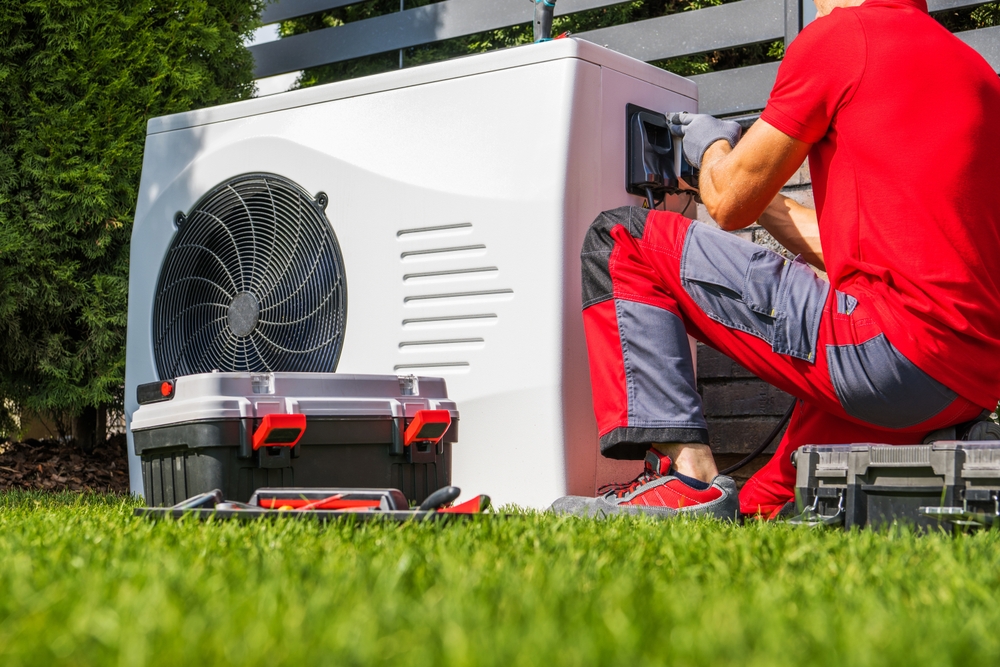
This is the question almost every pool owner eventually asks, and the honest answer is: it depends on age, the nature of the problem, and the cost of the repair relative to what a new pump would run you. A useful rule of thumb is this — if the repair cost is less than 50% of what a replacement pump would cost, and your pump is under seven or eight years old, a targeted repair is almost always the smarter financial move. If the pump is older and showing multiple symptoms at once, replacement starts to make more sense, especially when you factor in what modern equipment can save you on your electric bill.
The most common failure points we see in Broward County pools are capacitor failure, worn shaft seals, impeller damage, and motor winding issues from moisture intrusion. None of these are automatic death sentences for a pump. A capacitor replacement might run $100 to $200. A motor replacement typically falls in the $300 to $700 range. These are very different conversations than a full pump replacement, which in Florida can run anywhere from $800 to $2,500 depending on the unit and the complexity of the installation.
What you want to avoid is letting a failing pump keep running without diagnosis. An overheating motor can damage the pump housing. Running dry — a condition called cavitation — destroys impellers quickly. And electrical issues in the motor can ripple out to your automation system and control boards, turning a $300 repair into something far more expensive. The longer a struggling pump runs unaddressed, the more it costs to fix.
Signs worth paying attention to: grinding or screeching noises, the pump humming but not moving water, visible water pooling around the equipment pad, a sudden spike in your electric bill, or your pool turning cloudy faster than usual. Any one of these is worth a diagnostic call before it becomes a bigger problem.
If your pump has failed and it’s over one horsepower, federal law — specifically a Department of Energy regulation that took effect in July 2021 — requires that most replacements be variable-speed models. So for many Broward County homeowners, the upgrade conversation isn’t optional anymore. But the good news is that it’s genuinely worth it, and the numbers bear that out clearly.
Variable-speed pumps can reduce your pump’s energy consumption by up to 80 to 90 percent compared to a conventional single-speed unit. The physics behind it are straightforward: reducing pump speed by just 50 percent decreases energy use by roughly 87 percent, because of the way motor load scales with speed. In practical terms, a standard single-speed pump might draw 1,500 to 2,500 watts and cost you $80 to $150 per month to run. A variable-speed pump running at optimal speed draws 200 to 500 watts — closer to $10 to $25 per month.
In Broward County, where your pump runs 365 days a year instead of the 150 to 180 days typical in northern states, the return on investment is faster than the national average suggests. Most variable-speed pumps pay for themselves within 12 to 24 months through energy savings alone, often delivering $800 or more in annual savings. Researchers at the Center for Energy Conservation at Florida Atlantic University studied 120 pools and found that some owners cut their pumping bills by as much as 75 percent through energy conservation measures — and that’s Florida-specific data, not a national average applied to a market it doesn’t quite fit.
Beyond the savings, variable-speed pumps run quieter, last longer due to reduced motor stress at lower speeds, and integrate cleanly with modern pool automation systems. If you’re already thinking about adding smart controls or remote monitoring — which we’ll cover next — a variable-speed pump is the logical foundation for all of it.
Want live answers?
Connect with a DCP Pool Services expert for fast, friendly support.
Pool technology has come a long way in the last several years, and the upgrades that used to feel like luxury add-ons are increasingly practical choices — especially for homeowners who travel, have busy schedules, or simply want less to worry about during the summer months. The core of any smart pool system is a variable-speed pump paired with an automation platform, and from there the options expand based on what you actually want to manage remotely.
We work with Pentair and Hayward systems, both of which offer smartphone-connected automation that lets you monitor water temperature, adjust pump speed, control lighting, and receive alerts if something goes wrong — all from your phone. For homeowners heading out of town, that kind of visibility is genuinely useful. You’re not wondering whether your pool is circulating properly while you’re sitting at a gate in the Fort Lauderdale airport.

Pool automation removes the daily mental load of pool ownership. Instead of manually adjusting run times, checking equipment, or worrying about whether the chemistry is drifting while you’re away, the system handles the scheduling and sends you a notification if something needs attention.
For Broward County homeowners specifically, this matters more than it might in other markets. The summer rainy season — which runs from June through September — brings daily thunderstorms that dilute pool chemistry fast and increase the load on your filtration system. An automated system can compensate for this more consistently than manual adjustments, and if a pump fault or pressure issue develops, you’ll know about it before it becomes a bigger problem.
The installation process is straightforward when done by a qualified technician. We program the system to your pool’s specific parameters — volume, pump size, run time requirements, heating preferences — and walk you through the app before we leave. Most homeowners find the learning curve is about ten minutes. After that, the system largely manages itself, and you check in when you want to rather than when you have to.
One thing worth clarifying: pool automation is not the same as a “smart home” integration project. It doesn’t require rewiring your house or replacing your existing equipment in most cases. A Pentair or Hayward automation controller connects to your existing pump, heater, and lighting systems and gives you centralized control over all of them. If your equipment is in reasonable shape, the upgrade is often less disruptive — and less expensive — than people expect.
This one comes up constantly in Broward County, and for good reason. The combination of summer heat, high humidity, and a pool that isn’t being actively watched is a reliable recipe for problems. A pool that loses circulation in July in South Florida can turn green in 48 to 72 hours. Coming home from a week away to a swamp-colored pool — and then having to deal with emergency cleanup on top of whatever caused the circulation failure — is exactly the kind of thing a pre-vacation service call is designed to prevent.
What a thorough pre-vacation inspection covers is more than just the pump. We check the full equipment pad: pump and motor condition, filter pressure and flow, chemical levels, salt cell function if applicable, and any automation settings that need to be adjusted for an unattended period. We also look at things like the strainer basket, the pressure switch, and the electrical connections at the motor — details that don’t always make it onto a standard maintenance checklist but matter a lot when no one’s going to be home to notice a problem developing.
The cost of this kind of preventive service is a fraction of what emergency repair plus green pool remediation runs. And beyond the dollars, there’s the simple reality that coming home to a clean, clear pool after a trip is a completely different experience than coming home to a problem. For families with kids, for homeowners who entertain, for anyone who has spent real money on their backyard — it’s worth the call before you leave.
If you’re not sure whether your pump is in good enough shape to run unattended for a week or two, that uncertainty itself is a reason to have someone take a look. A pump that’s been making noise, losing pressure, or running harder than usual is a pump that’s more likely to fail under the sustained load of summer heat with no one around to catch it early.
The through line here is pretty straightforward: your pool pump is the engine of the whole system, and in Broward County’s climate, it works harder and ages faster than pumps in most other markets. Catching problems early, making smart upgrade decisions when the time is right, and doing a proper pre-season check before summer hits are the moves that keep your pool functional, your energy bills reasonable, and your summer plans intact.
If your pump is making noise, losing pressure, or you just haven’t had anyone look at it in a while, it’s worth addressing before the heat peaks and wait times stretch out. And if you’re heading out of town soon, a quick service call now is the lowest-stress insurance you can buy.
We handle all of this — repair, replacement, upgrades, and full pre-vacation prep — for homeowners across Broward County. Reach out by phone, text, or through the online quote form, and someone will get back to you within 24 to 48 hours to talk through what you actually need.
Article details:
Share:
Continue learning:
Ready for a Pool You'll Love?
Contact us today for a free quote!
DCP Pool Services
Company
Useful Links