Your pool pump may be sending warning signs you're missing. Here's what to watch for before a small issue turns into a ruined summer.
Share:

Summary:
Your pool pump runs quietly in the background — until it doesn’t. A strange noise, a drop in water clarity, a breaker that keeps tripping — these aren’t random inconveniences. They’re your pump telling you something’s wrong. And in Broward County, where your pool is often the centerpiece of your entire outdoor living space, ignoring those signals usually costs more than catching them early. This page breaks down the signs that matter, what’s likely causing them, and how to figure out whether you’re looking at a simple fix or something more serious. No fluff — just what you actually need to know.
Pool pumps don’t usually quit without warning. More often, they give you a series of small, easy-to-miss signals over days or weeks before anything dramatic happens. The problem is that most homeowners don’t know what those signals look like — or they notice them and assume it’s something else.
The most telling signs are a pump that’s making unusual noise, water that’s losing clarity even though you’re keeping up with chemicals, a pump that’s running but barely moving water, one that shuts off on its own or trips the breaker, or visible water pooling around the equipment. Any one of these is worth taking seriously. More than one at the same time means you should stop waiting and call us.
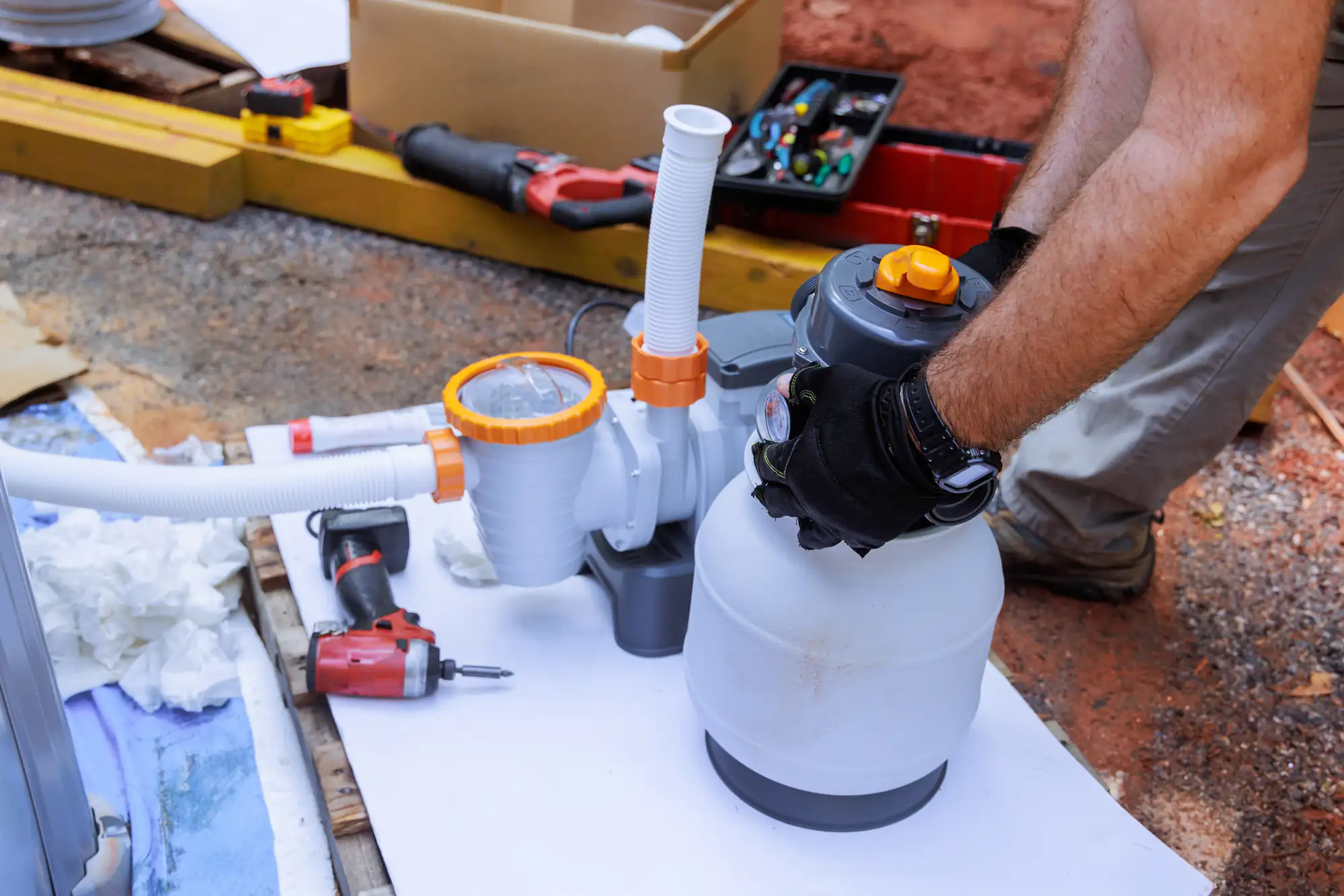
A grinding or screeching noise coming from your pump is almost always a bearing problem. The bearings inside the motor are what allow the shaft to spin smoothly, and when they start to wear out, metal rubs against metal. That’s the sound you’re hearing. It’s not subtle, and it doesn’t go away on its own.
Here’s the good news: worn bearings are one of the more straightforward repairs we handle. It doesn’t mean you need a new pump. A proper diagnosis will confirm whether it’s the bearings, the motor itself, or something else entirely — but that grinding sound is not a reason to panic and start pricing out replacements before we’ve even looked at it.
That said, don’t let it sit. Bearings that are left to deteriorate will eventually seize the motor shaft completely. At that point, what was a relatively inexpensive repair becomes a full motor replacement or worse. The cost difference between catching it early and ignoring it for another few weeks can be significant.
In Broward County specifically, motors take a harder beating than in most other parts of the country. Salt air from the Atlantic accelerates corrosion on metal components, and pumps that run year-round — which is essentially every pump in South Florida — accumulate wear faster than pumps in seasonal markets. A pump that might last 12 years in a northern climate may start showing bearing wear at 8 or 9 years here. That’s not a flaw in the equipment; it’s just the reality of running pool equipment in this climate, and it’s worth factoring into how you respond when something sounds off.
This is one of the most common situations we see, and it’s also one of the most misunderstood. A homeowner notices their water going cloudy or green, assumes it’s a chemical issue, adds more shock or algaecide, and still can’t get the pool back to blue. What they don’t realize is that the pump is the root cause.
When a pump isn’t circulating water effectively — whether because of a clogged impeller, an air leak in the suction line, or a worn impeller that’s lost its ability to pull water properly — your chemicals can’t do their job. Algae treatment and sanitizers depend on water movement to distribute evenly throughout the pool. If the pump is running but barely turning over the water volume it should be, you’re essentially adding chemicals to a stagnant pool. The green isn’t a chemistry problem. It’s a circulation problem.
A clogged or damaged impeller is one of the most frequent culprits. The impeller is the spinning component inside the pump that creates the suction and pressure to move water. Debris — leaves, hair, small particles that get past the basket — can jam or erode the impeller over time, reducing flow without stopping the pump entirely. The pump sounds like it’s working. The motor is running. But the actual water movement is a fraction of what it should be.
An air leak in the suction plumbing is another common cause. If air is getting into the system somewhere between the skimmer and the pump, the pump will lose prime intermittently, circulation will be inconsistent, and your filtration will suffer. You might notice bubbles returning through the return jets, or the pump basket may not stay full of water. These are all signs that air is entering the system somewhere it shouldn’t be.
In Broward County’s summer months, when afternoon storms dump heavy rain into pools and dilute chemical levels while simultaneously overloading filtration systems, a pump that’s already underperforming gets pushed even further. A pool that might stay clear with a fully functional pump can turn green within days when the pump is compromised and rainfall is adding volume and debris faster than the system can process it.
Want live answers?
Connect with a DCP Pool Services expert for fast, friendly support.
This is the question most homeowners are really asking when they call us. And the honest answer is: it depends on the age of the pump, what’s actually wrong with it, and what a repair would cost relative to a replacement.
A pump that’s under 8 years old with a failed capacitor, worn seal, or damaged impeller is almost always worth repairing. These are targeted, cost-effective fixes. A pump that’s 12 years old with a seized motor and corroded housing is a different conversation — at that point, putting money into a repair may only delay the inevitable by a year or two. We’ll always tell you which situation you’re in before any work begins, and we’ll give you the real numbers so you can make the decision that actually makes sense for your situation.
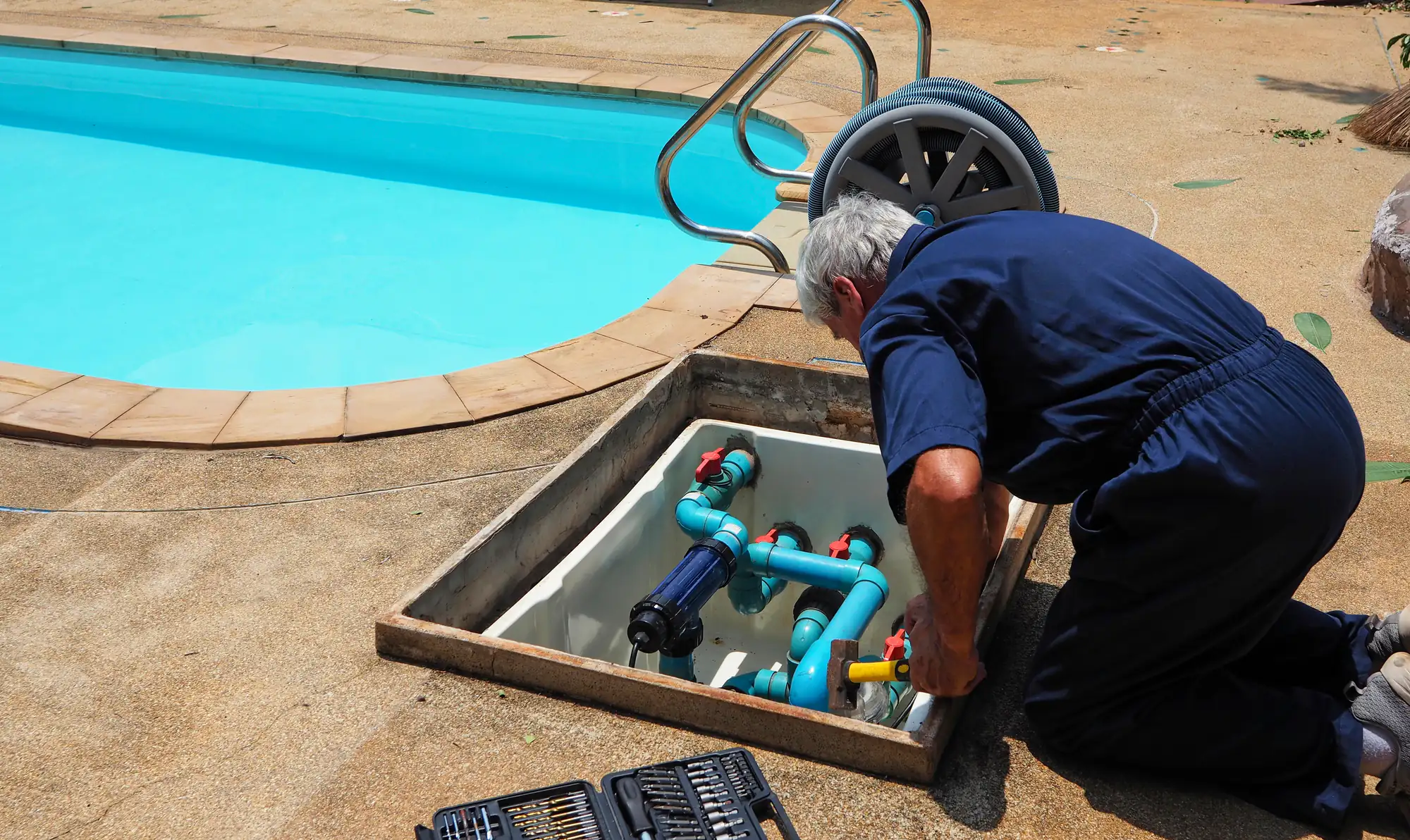
Nationally, minor pool pump repairs average somewhere between $120 and $190 for parts and labor. In Broward County, you can generally expect to pay 15 to 25 percent above the Florida state average, which reflects higher local labor rates and year-round contractor demand. That’s not a reason to delay — it’s just context so you’re not caught off guard.
For most common repairs — replacing a capacitor, swapping a shaft seal, clearing a jammed impeller, or fixing a suction-side air leak — you’re typically looking at a few hundred dollars at most. A full motor replacement runs higher, and a complete pump replacement with installation generally falls somewhere between $700 and $1,300 for a standard residential setup. Variable-speed pumps cost more upfront but run significantly more efficiently, which matters in South Florida where your pump is running every single day of the year and showing up on your FPL bill every month.
The repair-versus-replace conversation is one we take seriously. We’ve seen homeowners get talked into full pump replacements when a $150 capacitor swap would have solved the problem entirely. We’ve also seen homeowners spend money on repairs for pumps that were already past the point of no return. Neither outcome is good. What we do before any work starts is a proper diagnostic — checking the power supply, the motor windings, the impeller, the shaft seal, the capacitor, and the plumbing connections — so the recommendation we give you is based on what we actually found, not on what costs more.
If your pump is older and a repair is warranted, we’ll also talk to you about whether upgrading to a variable-speed model makes sense. For a pool in Coral Springs, Weston, or Pembroke Pines that runs year-round, the energy savings from a variable-speed pump can be meaningful over time — and a pump failure is a natural opportunity to have that conversation rather than simply replacing like-for-like.
**Can I run my pool without a working pump?** Technically, yes — but you shouldn’t. Without circulation, your pool water will stagnate quickly. Algae can take hold within 24 to 48 hours in Broward County’s heat and humidity, especially during summer when water temperatures are warm and chemical dissipation is fast. What starts as a pump problem can turn into a full algae remediation job that costs significantly more than the original repair. If your pump fails, get it looked at quickly.
**My pump keeps tripping the breaker. Is that an electrical problem or a pump problem?** Usually both. A pump that’s drawing too much current — because of a failing motor, a seized bearing, or a short in the wiring — will trip the breaker as a safety response. If you keep resetting the breaker without addressing the underlying cause, you risk damaging the breaker itself and making the underlying motor problem worse. In Broward County, where summer storms and FPL power fluctuations are a real and recurring issue, pump motors can also sustain damage from power surges during lightning events. If your pump started tripping the breaker after a storm, that’s worth mentioning when you call for service.
**How long should a pool pump last in Broward County?** Most pumps are rated for 8 to 12 years under normal conditions. In South Florida, continuous year-round operation, salt air exposure, intense UV radiation, and high ambient heat mean pumps in Broward County often reach the end of their effective life closer to the lower end of that range. A pump that’s 9 or 10 years old and starting to show symptoms isn’t failing prematurely — it’s right on schedule for this climate. Regular maintenance and early attention to warning signs can stretch that lifespan, but it’s worth knowing the realistic range before you’re surprised by a failure.
**Do I need a licensed contractor for pool pump repair in Florida?** Yes. Florida requires a state contractor’s license for this type of work, and the technician performing it should also hold CPO (Certified Pool/Spa Operator) certification — which is legally required in Florida for anyone servicing pool equipment and water quality. Our license number is CPC-1460991, publicly verifiable through the Florida DBPR. When you hire someone without these credentials, you’re taking on real risk — both in terms of work quality and legal liability if something goes wrong.
**What if I’ve already had someone look at it and they told me something different?** It happens more than it should. Pool pump diagnosis requires specific knowledge of hydraulics, electrical systems, and mechanical components — and not every pool cleaning company has that depth of experience with equipment repair. If you’ve gotten inconsistent answers, the right move is a fresh diagnostic from us. We’ll walk you through exactly what we found and why we’re recommending what we’re recommending. You should never feel like you’re being pushed toward an answer.
A pool pump problem rarely announces itself at a convenient time. It shows up in June when the kids are home, or right before a weekend you’ve been planning around. The signs are usually there beforehand — the noise, the slower circulation, the water that just won’t stay clear — but they’re easy to dismiss until something stops working entirely.
The smartest thing you can do is take the early signals seriously. A repair caught at the right time is almost always faster, cheaper, and less disruptive than one that’s been delayed. And in Broward County, where your pool is genuinely central to how you use your home for half the year, keeping that equipment in good shape isn’t optional maintenance — it’s protecting something you rely on.
If you’re noticing any of the signs covered here, or you’re just not sure what’s going on with your pump, reach out to us. We’ll give you a straight answer, upfront pricing, and a clear plan — no pressure, no guesswork.
Article details:
Share:
Continue learning: