Not sure if your failing pool equipment needs a simple fix or full replacement? This guide helps Broward County pool owners make informed decisions about pump repairs and heater installations.
Share:
Summary:
Your pool pump just started making a grinding noise. Or maybe your heater isn’t warming the water like it used to. Now you’re stuck wondering whether you need a quick fix or if it’s time to bite the bullet and replace the whole unit.
It’s a frustrating spot to be in. Repairs aren’t cheap, but replacement costs even more. And if you choose wrong, you could be throwing money at a problem that’s only going to get worse.
The truth is, there’s no one-size-fits-all answer. But there are clear factors that make the decision easier when you know what to look for. Let’s start with understanding what’s actually happening when your equipment starts to fail.
Pool equipment doesn’t usually quit without warning. Pumps and heaters send signals before they completely fail, and catching those signs early can save you from emergency repairs and secondary damage.
The most obvious sign is noise. A healthy pump runs with a steady hum. When you start hearing grinding, screeching, or rattling, that’s typically worn bearings or a damaged impeller. These issues get progressively worse, and if you ignore them long enough, the motor will seize completely.
Leaks are another red flag. Water pooling around your pump usually means a failing shaft seal or cracked housing. Small leaks turn into bigger ones fast, and if water reaches the motor windings, you’re looking at total failure. Heaters can develop leaks too, often from corroded heat exchangers or loose connections.
Then there’s performance. Weak water flow, inconsistent heating, or a pump that won’t hold prime all point to internal problems. Sometimes it’s something simple like a clogged impeller or dirty filter. Other times it’s a sign that major components are wearing out.

Broward County’s climate is tough on pool equipment. Your pump runs year-round, not just during summer months like pools up north. That constant operation, combined with heat, humidity, and occasional storms, creates specific failure patterns you should know about.
Capacitor failure is extremely common. The capacitor is what gives your pump motor the jolt of electricity it needs to start. When it fails, the pump hums but won’t turn on. You’ll hear the motor trying to engage, but it just sits there. Capacitors wear out from age, heat exposure, and power surges. The good news is they’re relatively inexpensive to replace, usually running $50-150 for parts and labor.
Motor bearing wear is another frequent issue. Bearings allow the motor shaft to spin smoothly. Over time, especially in Florida’s heat, they dry out and start to grind. That’s where the screeching noise comes from. If caught early, you can sometimes replace just the bearings. Wait too long, and the friction damages the motor shaft itself, which means you need a whole new motor or pump.
Seal leaks happen when the mechanical seal between the wet end and the motor fails. This seal keeps water from getting into the motor housing. Florida’s constant heat cycles cause the seal material to break down faster than in cooler climates. A seal replacement typically costs $100-250, but only makes sense if the rest of the pump is in decent shape.
Air leaks are sneaky. When your pump loses prime frequently or you see bubbles in the return lines, air is getting into the system somewhere before the impeller. Common culprits include a loose pump lid, worn lid O-ring, or cracks in the suction-side plumbing. These issues stress the pump because it’s working harder to pull water, which accelerates wear on other components.
Clogged impellers reduce flow and make your pump work overtime. Debris, leaves, or even small rocks can get past the basket and jam in the impeller. In Broward County, where debris accumulates year-round from tropical vegetation and frequent storms, this happens more often than you’d think. Sometimes you can clear it yourself. Other times the impeller blades are damaged and need replacement.
Electrical problems show up as tripped breakers or a pump that won’t start at all. If your pump repeatedly trips the circuit breaker, the motor is either drawing too much current due to internal failure, or there’s a short circuit from water intrusion. Both situations need immediate attention because they’re safety hazards and will only get worse.
Pool heaters face different challenges than pumps. They deal with combustion (for gas models), heat exchange, and constant exposure to pool chemicals. Knowing when to repair versus replace comes down to understanding what’s actually broken and how old the unit is.
Gas heaters typically last 8-10 years in Florida. The heat exchanger is the most expensive component and the most likely to fail. When the heat exchanger develops significant corrosion or cracks, you’re looking at a repair that can cost $800-1,500 or more. If your heater is already 7-8 years old and needs a heat exchanger, replacement almost always makes more financial sense. You’d be putting major money into a unit that’s near the end of its lifespan anyway.
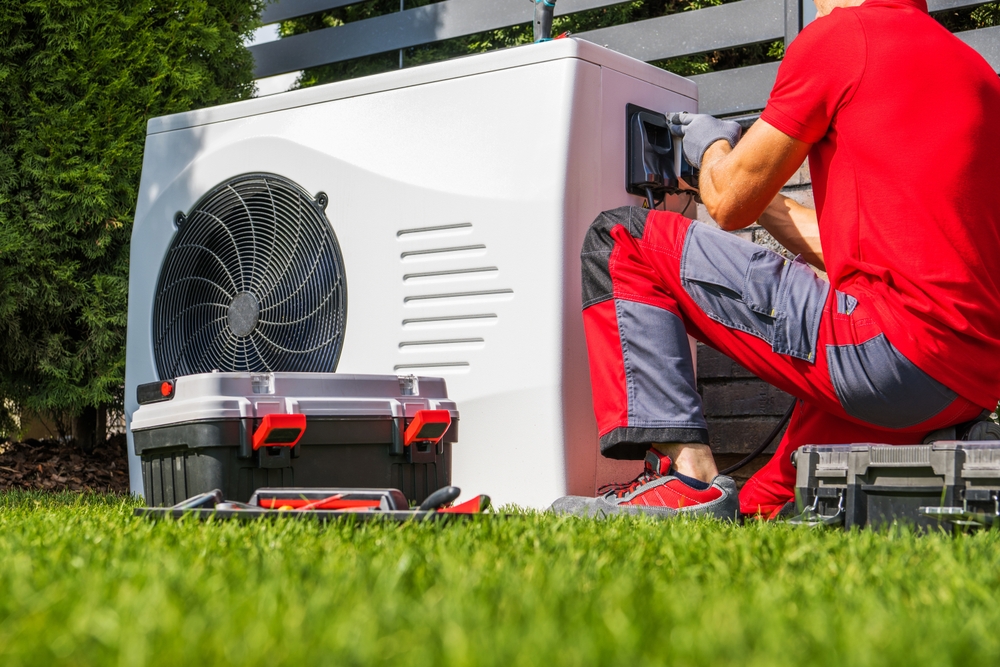
Heat pumps last longer, usually 10-15 years, because they don’t use combustion. But they have their own issues. Compressor failure is the big one. A failing compressor means inconsistent heating or no heating at all. Replacing a compressor costs nearly as much as a new heat pump, so if your unit is over 8 years old and the compressor goes, replacement is usually the smarter call.
Smaller repairs like pilot assemblies, pressure switches, thermostats, or ignition components are different. These parts cost $200-500 to fix and can extend the life of a heater that’s otherwise in decent shape. If your heater is only 4-5 years old and needs one of these repairs, it’s absolutely worth doing.
One factor people often overlook is efficiency. Older heaters, especially gas models from 10+ years ago, are far less efficient than current models. A new high-efficiency gas heater or modern heat pump can cut your heating costs by 30-40%. When you factor in those monthly savings, the payback period on a new heater can be surprisingly short.
Leaks in gas heaters often indicate rust or corrosion in the heat exchanger or connections. Minor leaks at fittings can be fixed. But if the heat exchanger itself is leaking, you’re done. The heat exchanger is the heart of the heater, and once it’s compromised, the whole unit needs replacement.
For heat pumps, refrigerant leaks are a similar deal-breaker. If the coils are leaking refrigerant, repair costs add up fast between finding the leak, fixing it, and recharging the system. On an older unit, that money is better spent on a new heat pump that comes with a warranty.
Error codes can help diagnose heater problems, but they’re not always straightforward. Modern heaters have control boards that monitor various sensors and components. When something fails, you get an error code. Sometimes it’s a simple fix like a dirty sensor. Other times it indicates a major component failure. A qualified technician can interpret those codes and tell you whether you’re looking at a minor repair or a major problem.
Want live answers?
Connect with a DCP Pool Services expert for fast, friendly support.
The sticker price isn’t the whole story. You need to look at repair costs, remaining equipment life, energy efficiency, and the risk of additional failures down the road.
Here’s a practical framework: if the repair costs more than 50% of what a new unit would cost, and your equipment is already past the halfway point of its expected lifespan, replacement usually makes more sense. For example, if your 6-year-old pool pump needs a $450 motor repair and a new pump costs $800, you’re at 56% of replacement cost on a pump that’s already past its midpoint. That’s a replacement scenario.
On the flip side, if your 3-year-old pump needs a $150 capacitor replacement and a new pump costs $900, that’s only 17% of replacement cost on equipment that should have years of life left. Easy repair decision.
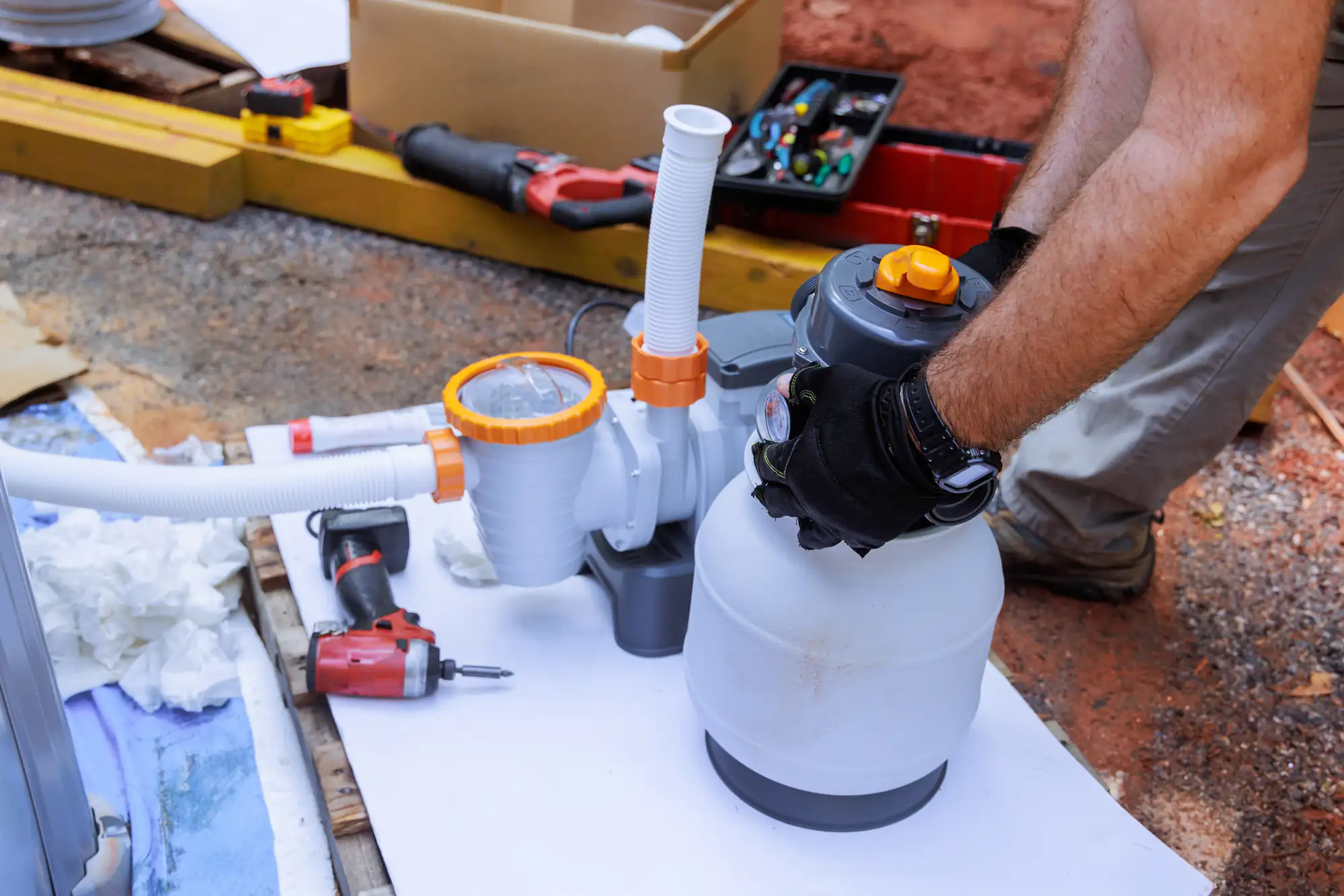
Pool pump repair costs vary based on what’s actually wrong, but here are realistic numbers for common repairs in the Broward County area.
Capacitor replacement runs $50-150. This is one of the most common repairs and one of the cheapest. The part itself costs $20-40, with the rest being labor. If your pump hums but won’t start, there’s a good chance it’s the capacitor. This repair is almost always worth doing unless the pump has other major issues.
Seal replacement costs $100-250. The shaft seal sits between the wet end and the motor, keeping water out. When it fails, you’ll see water leaking from the pump. This repair involves disassembling the pump, replacing the seal, and reassembling everything. On a pump that’s less than 7-8 years old, it’s usually worth it. On an older pump, you need to consider whether other components might fail soon.
Motor replacement is the big one, typically $300-500 for parts and labor. At this point, you’re essentially rebuilding the pump. The wet end (the part that moves water) stays, but you’re getting a new motor. This repair only makes sense if the pump is relatively young and the wet end is in good shape. On a pump that’s 8+ years old, you’re better off replacing the entire unit.
Impeller cleaning or replacement costs $75-200. If your impeller is just clogged with debris, cleaning it is cheap. If the impeller blades are cracked or damaged, you need a new impeller, which adds to the cost. This is almost always worth doing because it’s a straightforward fix that restores proper flow.
Complete pump replacement for a standard residential pool runs $700-1,500 for a quality single-speed pump, or $1,200-2,500 for a variable-speed model. That includes the pump, installation, and any minor plumbing adjustments. Variable-speed pumps cost more upfront but can save you $200-600 per year on electricity in Florida’s year-round swimming climate. The payback period is typically 1-2 years.
When you’re evaluating repair costs, don’t just look at the immediate expense. Consider the age of the equipment and the likelihood of additional failures. If you fix a capacitor on an 8-year-old pump today, what are the odds you’ll need a seal replacement in six months and a motor replacement a year from now? Sometimes it makes more sense to replace once rather than repair three times.
Also factor in energy costs. An old single-speed pump can cost $600-1,200 per year to operate in Broward County. A variable-speed pump might cost $150-300 per year. That $400-900 annual savings adds up fast. Over a 10-year lifespan, you could save $4,000-9,000 in electricity costs. When you look at it that way, spending an extra $500-800 for a variable-speed pump during replacement becomes an easy decision.
Pool heater installation costs vary significantly based on the type of heater, the size of your pool, and how the new system connects to your existing equipment.
Gas heaters are the least expensive to install, typically running $1,500-4,500 for the complete job. The heater itself costs $1,000-3,000, with installation making up the rest. Gas heaters heat water quickly, raising temperature by 1-3 degrees per hour, which makes them popular for spas and for pool owners who only heat occasionally. The downside is operating cost. Running a gas heater for a full pool can cost $300-600 per month or more, so many Broward County homeowners use them sparingly or only for attached spas.
Electric heat pumps are the most popular option in Florida and cost $3,500-6,500 installed. They pull heat from the air and transfer it to your pool water, making them much more energy efficient than gas heaters. Operating costs run $50-150 per month depending on pool size and desired temperature. The upfront cost is higher, but the monthly savings add up. Over a 10-year lifespan, a heat pump can save thousands compared to gas.
Solar heaters are the most economical to operate since they use free energy from the sun, but installation costs are higher, typically $2,000-4,000 for the panels and installation. Solar works well in South Florida’s sunny climate, but performance depends on available roof space, sun exposure, and how much you want to raise the water temperature. Many homeowners combine solar with a heat pump or gas heater for the best of both worlds.
Installation costs represent 30-50% of the total price in most cases. That includes labor, materials like pipes and fittings, electrical or gas line work, and any permits required by Broward County. If you’re replacing an existing heater, installation is usually straightforward. If you’re adding a heater where none existed before, costs go up because new gas lines or electrical circuits may be needed.
Size matters. Your pool’s volume determines what size heater you need. Undersizing a heater means it runs constantly and never quite gets the water to your desired temperature. Oversizing wastes money on capacity you don’t need. A qualified technician should calculate the right size based on your pool’s gallons, desired temperature, and how quickly you want the water to heat up.
Warranties vary by manufacturer and model but typically run 1-3 years for parts. Some manufacturers offer extended warranties on specific components like heat exchangers or compressors. When comparing heater options, factor in warranty coverage. A slightly more expensive heater with a better warranty can save you money if something goes wrong in year two or three.
Energy rebates are available in some areas. Florida Power & Light and other utilities have offered rebates for energy-efficient heat pumps in the past, sometimes $100-200 per unit. Check with your utility provider before installation to see what’s currently available. Those rebates can offset some of the upfront cost difference between a standard heater and a high-efficiency model.
There’s no universal answer to repair versus replace. It depends on your equipment’s age, the specific problem, repair costs compared to replacement, and how much life you can realistically expect from a fix.
The key is getting an honest assessment from someone who understands pool equipment and isn’t just trying to sell you the most expensive option. Look for clear explanations of what’s wrong, realistic cost comparisons, and technicians who walk you through the pros and cons of each choice.
When equipment does need replacement, think beyond just fixing the immediate problem. Variable-speed pumps, high-efficiency heaters, and modern automation can cut your operating costs significantly while making your pool easier to maintain. Sometimes the smart move isn’t the cheapest fix today, but the investment that saves you money and headaches over the next 10 years.
If you’re dealing with equipment issues and want a straightforward evaluation of your options, we provide honest assessments and transparent pricing for pool owners throughout Broward County.
Article details:
Share:
Continue learning:
Ready for a Pool You'll Love?
Contact us today for a free quote!
DCP Pool Services
Company
Useful Links