Broward County, FL homeowners are upgrading pools with deck remodeling and smarter maintenance. Learn the real costs, trends, and solutions that work in Florida's demanding climate.
Share:
Summary:
Your pool looked perfect a decade ago. Now the deck’s cracking, the plaster feels rough, and you’re spending weekends troubleshooting equipment instead of swimming. Sound familiar? Broward County, FL has over 120,000 residential pools, and most face the same beating from Florida’s relentless sun, afternoon thunderstorms, and year-round humidity. Pool deck remodeling and smarter pool maintenance approaches are giving homeowners their backyards back—not through trendy gimmicks, but through solutions that actually hold up in South Florida’s demanding climate. You’ll learn what pool maintenance really costs, when pool repair makes more sense than replacement, what pool deck remodeling runs in 2026, and how to avoid the expensive mistakes that come from treating Florida pools like they’re anywhere else.
Pool maintenance in Broward County, FL isn’t the same as maintaining a pool in Phoenix or Atlanta. Florida’s climate accelerates chemical breakdown, creates perfect algae conditions, and dilutes your water chemistry every time it rains. The sun burns off chlorine 30% faster here than in cooler regions.
Skip one week of pool maintenance and you’ll see the difference. Clear water turns cloudy. The walls get slippery. Chemical balance drifts out of range. Weekly service isn’t excessive—it’s what Florida pools need to stay swimmable.
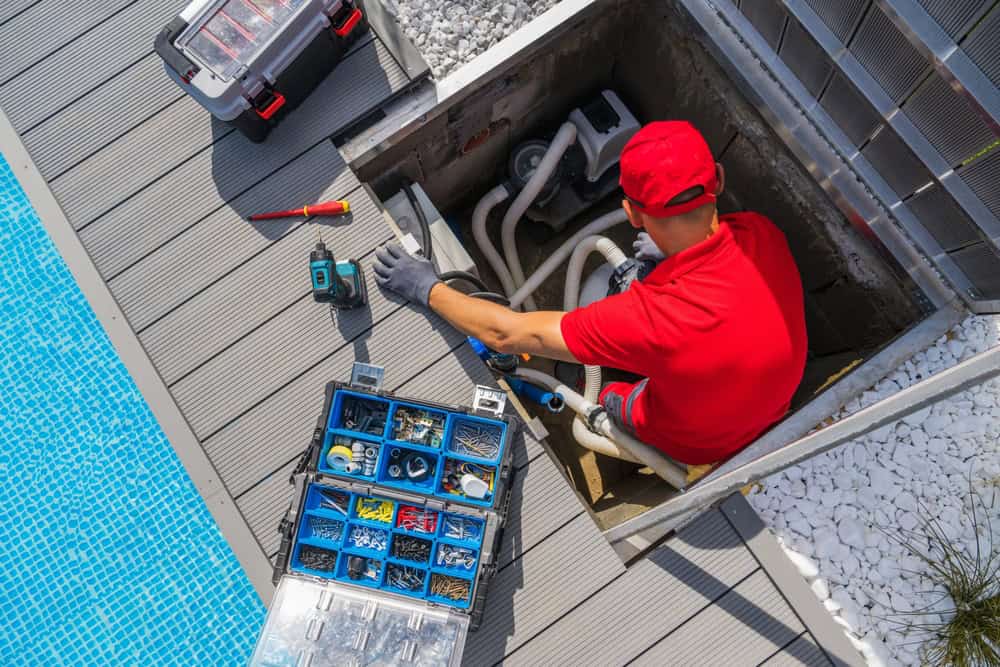
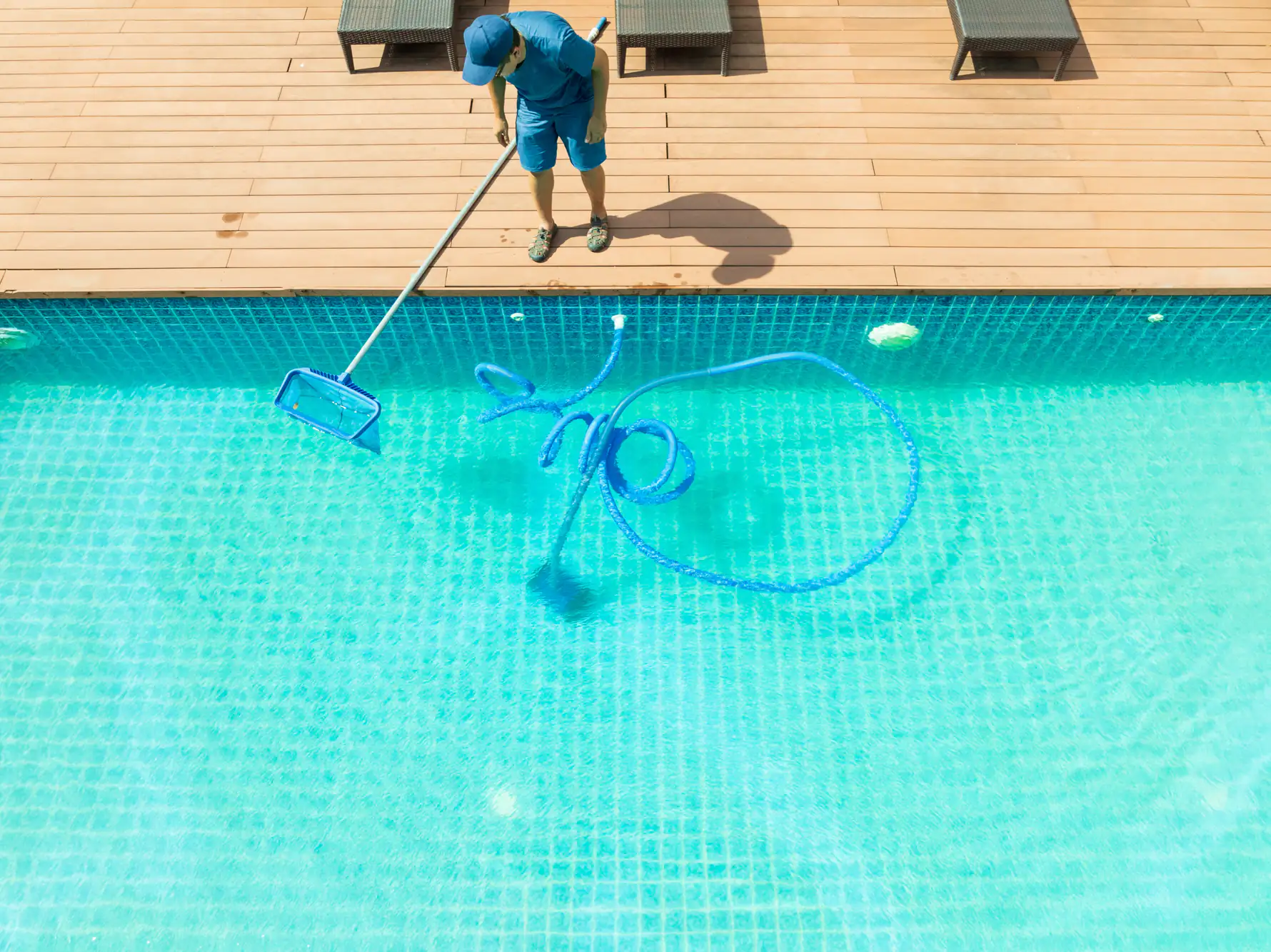
Professional pool maintenance covers skimming, vacuuming, chemical testing, filter checks, and equipment inspection. It catches small problems before they become pool pump repair emergencies or require expensive leak detection services.
Florida’s subtropical climate creates pool maintenance demands that homeowners in other states never encounter. The intense UV radiation breaks down chlorine faster, which means you’re adding chemicals more frequently just to maintain safe swimming levels between 1 and 3 ppm.
Broward County, FL has hard water that leaves calcium deposits on tiles and pool surfaces. These deposits aren’t just cosmetic issues—they create rough textures where algae anchors and spreads. The constant warmth means your pool never gets a maintenance break. There’s no winter slowdown where algae growth stops or where you can relax chemical balancing.
Afternoon thunderstorms add another variable. Heavy rain doesn’t just top off your pool—it dilutes the chemical balance and introduces contaminants from runoff. After a significant storm, you’re essentially rebalancing from scratch.
Humidity affects pool equipment too. Pump motors, heaters, and electrical components work harder in muggy conditions. Rubber seals dry out and crack despite the moisture. Metal components corrode faster. Your pool deck expands and contracts with temperature swings, which explains the cracks forming around the coping.
These challenges explain why weekly professional pool maintenance makes financial sense in Broward County, FL. The cost of consistent service runs $140 to $160 per month—a fraction of what you’ll pay for pool pump repair on a burned-out motor or pool replastering on a chemically damaged surface. Homeowners who handle pool maintenance themselves often underestimate the attention Florida pools demand.
They test water when they remember. Add chemicals when it looks off. Wonder why they’re constantly fighting algae despite their efforts. Professional pool maintenance removes guesswork and catches issues early—before you’re searching for leak detection services or emergency pool repair on a Friday afternoon.
Your pool pump is grinding. The heater isn’t warming water like it should. Filter pressure reads higher than normal. These moments force a decision: pool repair or full replacement?
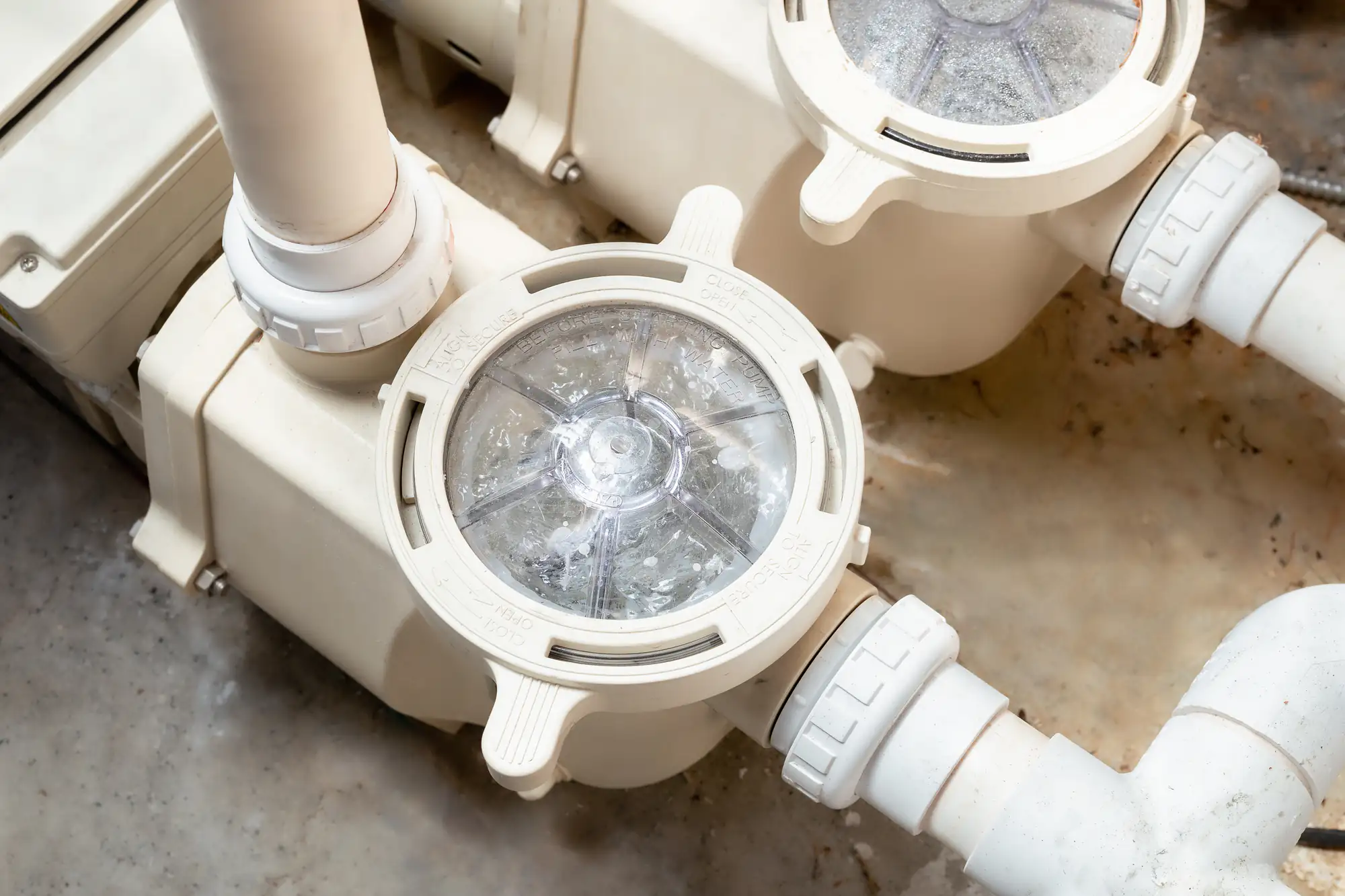
Pool equipment that receives proper pool maintenance lasts 8 to 15 years in Florida. Neglected equipment fails at half that lifespan. A pump designed for a decade might die at year five if filters haven’t been cleaned regularly or chemical balance has been consistently off.
Here’s the calculation—if equipment is less than halfway through its expected lifespan and pool repair costs less than 50% of replacement, fixing it makes sense. A $200 seal replacement on a three-year-old pump is smart. A $1,500 heat exchanger repair on a decade-old gas heater isn’t.
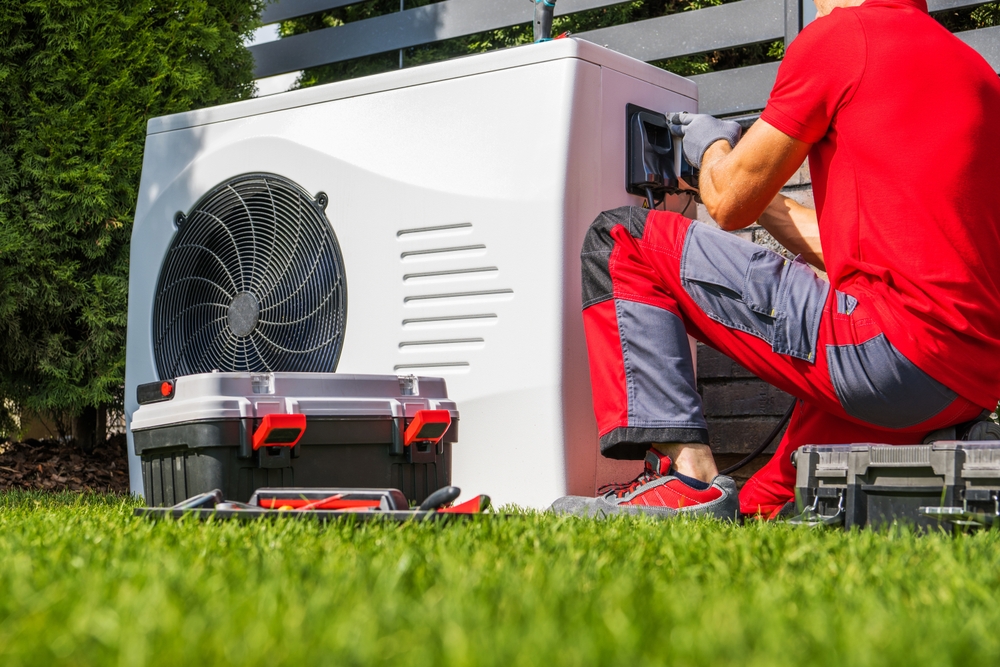
Variable speed pumps have changed this equation. If you’re running a single-speed pump from 2015, pool heater installation of a modern variable speed model cuts energy costs by $400 or more annually. The new equipment pays for itself through electricity savings while delivering quieter operation and better efficiency.
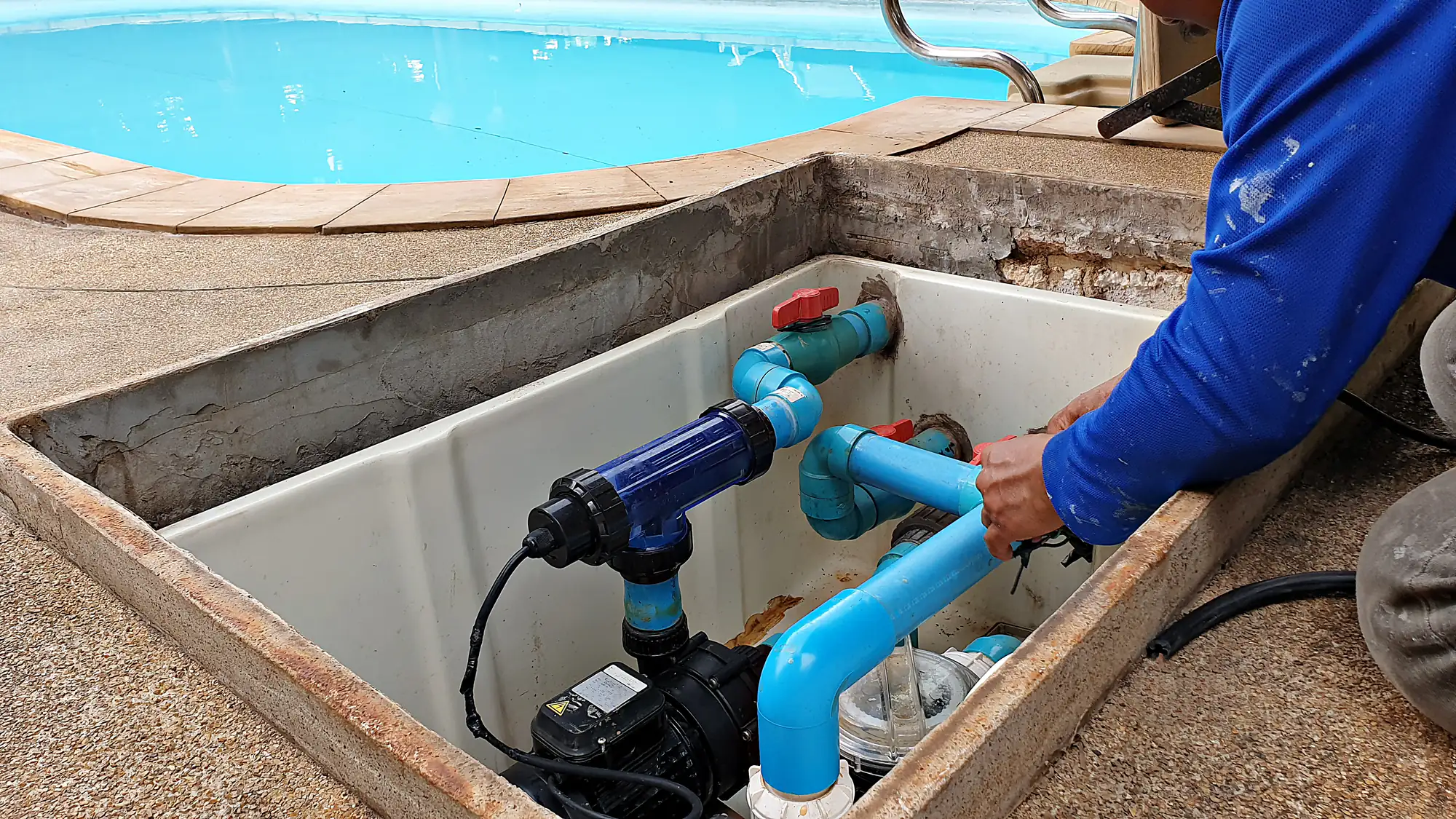
Leak detection is another area where professional assessment matters. Water loss exceeding a quarter inch daily isn’t normal evaporation in Broward County, FL—it’s a leak. Some leaks are simple pool repair jobs like replacing a worn skimmer gasket. Others involve underground plumbing requiring excavation. Proper pressure testing identifies the problem location before anyone starts digging.
Salt systems and automation introduce new pool repair considerations. A failed salt cell costs around $600 to replace, but if the rest of your system works fine, that’s still cheaper than converting back to traditional chlorine. Automation controllers throw intimidating error codes that often just need software resets or sensor replacements.
The difference is getting honest assessment from technicians who aren’t pushing the most expensive option. We explain what’s failing, why it’s failing, and your realistic options. We tell you when a repair buys two more years versus when replacement is the smarter long-term investment.
Want live answers?
Connect with a DCP Pool Services expert for fast, friendly support.
Cracked concrete around your pool isn’t just an eyesore—it’s a safety hazard and evidence that water’s penetrating where it shouldn’t. Pool deck remodeling has become one of the most requested upgrades in Broward County, FL for good reason.
Modern materials handle Florida’s heat better than old concrete. Pavers stay cooler underfoot, resist cracking, and can be individually replaced if damaged. The upfront investment is higher, but longevity and reduced maintenance make the numbers work.
Pool deck remodeling in Broward County, FL typically runs $15,000 to $25,000 depending on square footage and material selection. That includes complete removal of old surfaces, proper base preparation, drainage solutions, and professional installation with permits.
Concrete was standard for decades, but it struggles in Florida’s climate. It absorbs heat, cracks from root growth and ground movement, and stains from pool chemicals and organic debris. Once concrete starts failing, repairs are temporary patches that never quite match.
Pavers have become the preferred choice for pool deck remodeling in Broward County, FL. Travertine stays cool even under direct July sun, which matters when you’re walking barefoot. It’s naturally slip-resistant when wet, addressing the biggest safety concern around pools. The stone is porous enough for drainage but dense enough to resist staining from chlorine and other pool chemicals.
Concrete pavers cost less than natural stone while still outperforming poured concrete. They come in multiple colors and patterns, interlock for stability, and can be lifted and releveled if ground settles over time. That’s valuable in Florida where soil conditions vary and settling happens.
Installation process matters as much as material choice in pool deck remodeling. Proper work starts with complete removal of old surfaces—not just laying new materials on top. The base gets excavated, graded for drainage, and compacted with appropriate aggregate. Edge restraints prevent paver shifting. Polymeric sand in joints blocks weed growth and insect intrusion.
Permits and inspections are required for pool deck remodeling in Broward County, FL. Professional contractors handle paperwork and ensure work meets local building codes. We protect pool equipment during construction, maintain home access, and schedule work to minimize disruption.
Color selection affects more than appearance. Lighter colors reflect heat and stay cooler but may show stains more readily. Darker colors hide dirt better but absorb more heat. Most Broward County, FL homeowners choose medium tones that balance both concerns.
Sealing is the final consideration in pool deck remodeling. Some materials benefit from penetrating sealers that protect against staining and simplify cleaning. Others, like certain travertines, perform better unsealed to maintain natural slip resistance. Your contractor should explain what makes sense for your specific material and how often resealing is needed.
Pool plaster has a finite lifespan. In Broward County, FL, that’s typically 7 to 12 years depending on pool maintenance and water chemistry. Once you see rough patches, stains that won’t brush away, or visible cracks, you’re looking at pool replastering.
Pool replastering in Broward County, FL averages $6,000 to $8,000 for standard white plaster. Quartz finishes run $7,000 to $10,000 and deliver longer life with better stain resistance. Pebble surfaces cost $7,000 to $15,000 but can last 15 to 20 years with proper pool maintenance.
The pool replastering process takes about a week. The pool gets drained, old plaster is removed, any structural pool repair is completed, and new surface is applied. After the plaster cures, the pool is refilled and water chemistry is carefully balanced during the critical startup period.
Finish selection involves trade-offs. Standard plaster is most affordable but requires the most pool maintenance and has the shortest lifespan. It’s smooth but vulnerable to staining from metals in water and etching from improper chemical balance.
Quartz plaster adds colored quartz crystals, creating a speckled appearance that hides minor stains better than pure white. It’s more durable than standard plaster and resists algae growth more effectively. The texture is slightly rougher, which some swimmers prefer for better footing on steps and benches.
Pebble finishes use small stones mixed into plaster, creating natural, textured surfaces. They’re the most durable pool replastering option and handle chemical imbalances better than smooth plaster. The rough texture isn’t for everyone—some find it uncomfortable, others appreciate the natural appearance and longevity.
Aggregate finishes fall between quartz and pebble in cost and durability. They use blends of materials like glass beads or crushed stone to create different visual effects and textures. These finishes have grown popular with Broward County, FL homeowners wanting something more distinctive than standard plaster without full pebble texture.
Timing matters with pool replastering. Don’t wait until plaster deteriorates so badly it exposes underlying structure. Once water reaches the gunite or concrete shell, you’re dealing with structural pool repair that costs significantly more than pool replastering alone. Catching it early keeps the project straightforward and costs manageable.
Water chemistry becomes critical after pool replastering. New plaster needs specific startup procedures to cure properly. The pH and alkalinity must be carefully controlled for the first month. Rushing this process or using the pool too soon permanently damages the new surface. Professional pool maintenance services know these protocols and can manage startup for you.
Pool ownership in Broward County, FL comes with climate challenges other regions don’t face. The weather is tough on equipment, surfaces, and water chemistry. Understanding what works and what doesn’t separates constant headaches from pools you actually enjoy using.
Regular pool maintenance prevents expensive problems. Pool deck remodeling transforms your entire outdoor space when done correctly. Equipment upgrades through pool heater installation or pool pump repair reduce energy costs and improve reliability. Pool replastering at the right time protects your pool’s structure and delivers years of worry-free swimming.
The difference is working with professionals who understand South Florida pools specifically—not just pools in general. We know what Broward County, FL homeowners face because we’ve been solving these problems for years. From weekly pool maintenance to complete pool deck remodeling projects, we focus on solutions that hold up in Florida’s demanding climate.
Article details:
Share:
Continue learning: