Thinking about handling your own pool maintenance? Here's what Broward County homeowners actually spend — in time, money, and headaches — before they call a pro.
Share:
Summary:
You bought the pool to relax. Not to spend your weekends testing water samples, hauling chemicals, and troubleshooting a pump that’s making a noise you’ve never heard before. But here you are, wondering if it’s finally time to hand it off — or if you’re just paying for something you could figure out yourself.
It’s a fair question. And the answer isn’t as simple as “just hire someone.” It depends on what your time is worth, how forgiving your pool’s environment is, and what the real cost of getting it wrong looks like. In Broward County, those factors tip the scale in a pretty clear direction — and we’ll show you exactly why.
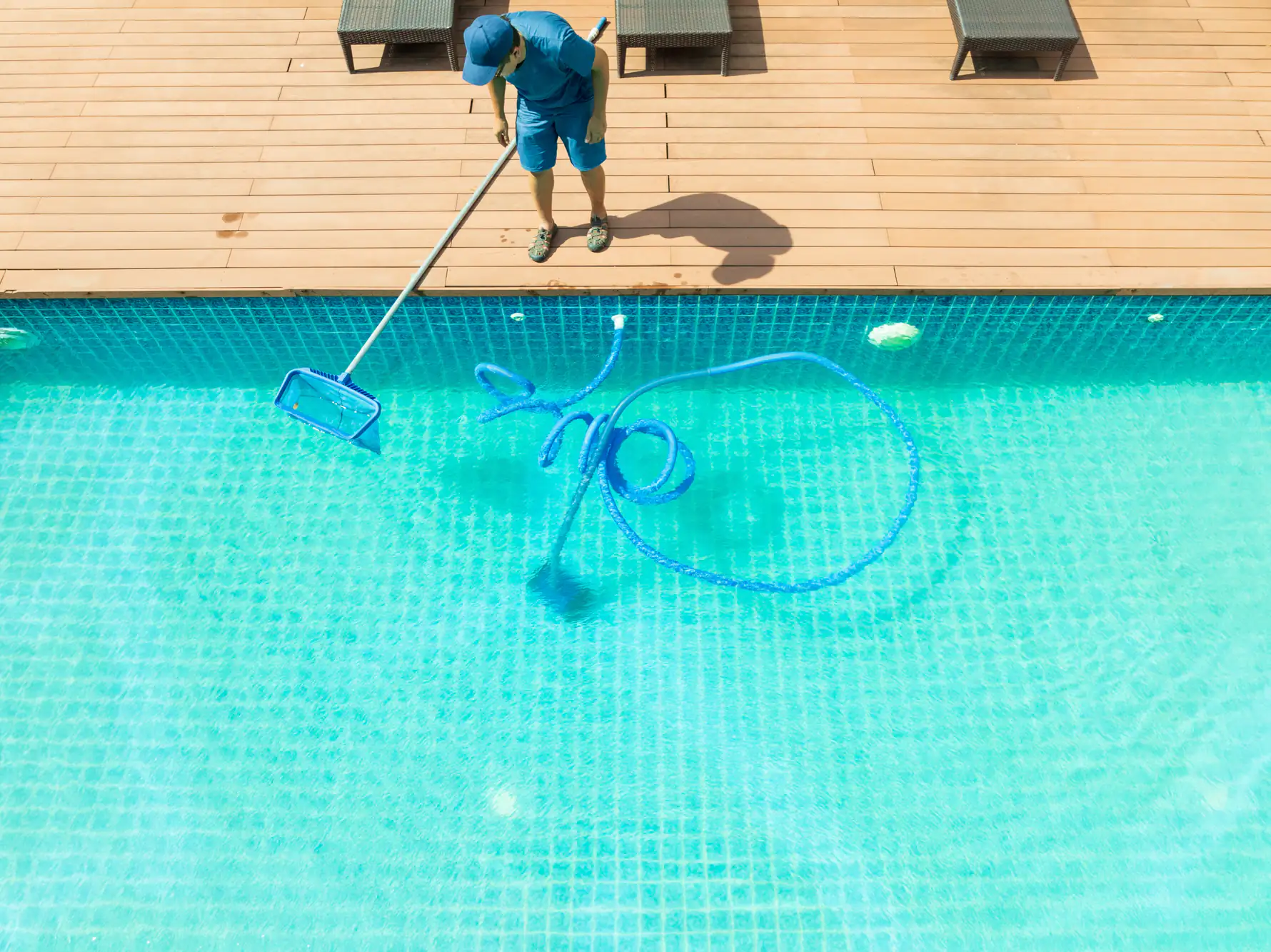
Most homeowners underestimate what consistent pool maintenance requires. It’s not just skimming leaves off the surface. Every week, a properly maintained pool needs its water chemistry tested and adjusted, its walls and floor brushed, its filter cleaned, and its equipment checked for early signs of wear. In Broward County’s subtropical heat, skip any one of those steps and you can watch a clean pool go sideways in a matter of days.
The chemistry side alone involves balancing pH, alkalinity, calcium hardness, chlorine levels, and cyanuric acid — variables that interact with each other in ways that aren’t always intuitive. Get the pH wrong and your chlorine becomes far less effective. Let alkalinity drift and your pH becomes nearly impossible to stabilize. It’s a system, not a checklist.
That’s before you factor in the physical time. Realistically, thorough weekly pool maintenance takes between 30 minutes and two to three hours depending on your pool size, how much debris it collects, and whether anything needs attention. Over the course of a year, that’s anywhere from 26 to over 150 hours spent maintaining a pool you’d rather be swimming in.
The appeal of DIY pool maintenance is obvious — you skip the monthly service fee and handle it yourself. On paper, that looks like savings. In practice, the math gets complicated quickly.
Chemicals alone run $600 to $1,200 per year for a typical residential pool. Add in a quality test kit, a vacuum, brushes, a skimmer net, and the occasional replacement part, and you’re looking at another $500 to $1,500 in equipment costs annually. That puts the real cost of DIY somewhere between $1,100 and $2,700 per year before you’ve accounted for a single mistake.
And mistakes happen. In Broward County’s subtropical climate — where summer temperatures push into the 90s, UV intensity is relentless, and the rainy season runs from May through October — the margin for error is genuinely small. Heavy rainfall dilutes your chemistry overnight. Intense sun burns through chlorine faster than it would in a cooler climate. Algae doesn’t take weeks to develop here; it can turn a pool green in a matter of days when conditions are right.
When a DIY chemistry miscalculation leads to an algae bloom, the correction isn’t cheap. A professional algae treatment can run $200 to $400. An acid wash — sometimes necessary when algae has embedded itself in the pool surface — costs $400 to $550. These are reactive expenses that pile on top of your regular DIY supply costs, often erasing whatever savings you thought you were getting.
Compare that to professional pool maintenance, which typically runs $121 to $372 per month depending on pool size and service scope. For most Broward County homeowners, the gap between DIY and professional service is far narrower than they assumed — and that’s without counting the hours they’re getting back.
This is where the DIY conversation gets specific to where you live. Broward County is not a forgiving environment for a pool that’s being maintained inconsistently or incorrectly. The combination of heat, humidity, UV exposure, and annual rainfall creates conditions that demand more from pool maintenance than most national guides acknowledge.
Chlorine degrades faster in high UV environments. That means pools here need more frequent chemical replenishment than pools in cooler, cloudier climates. If you’re following a maintenance schedule designed for somewhere else, you’re already behind. South Florida’s sun is genuinely different, and the chemistry has to keep pace with it.
The rainy season adds another layer. When six inches of rain falls in a week — which is not unusual in Broward County between June and October — it dilutes your pool’s chemistry, raises the water level, and introduces organic matter that feeds algae. A pool that was balanced on Monday can be out of range by Thursday after a heavy storm. Without a professional checking in weekly, those imbalances compound.
Hurricane season, which runs June through November, creates its own set of challenges. Pre-storm preparation matters — pool equipment needs to be secured, water levels adjusted, and chemistry prepped for what’s coming. Post-storm, debris removal and chemical rebalancing are non-negotiable. Homeowners who’ve been through a South Florida storm season know that the aftermath isn’t just about the house — the pool takes a hit too.
There’s also the question of equipment. Coastal proximity means salt air corrosion is a real factor for pool equipment in many parts of Broward County. Pumps, filters, and metal fittings exposed to that environment need more frequent inspection than they would inland. A professional technician who visits weekly catches early signs of corrosion and wear before they become a pump failure at the worst possible time.
Want live answers?
Connect with a DCP Pool Services expert for fast, friendly support.
Routine maintenance is one thing. Equipment problems are another category entirely — and this is where the DIY calculation shifts most dramatically.
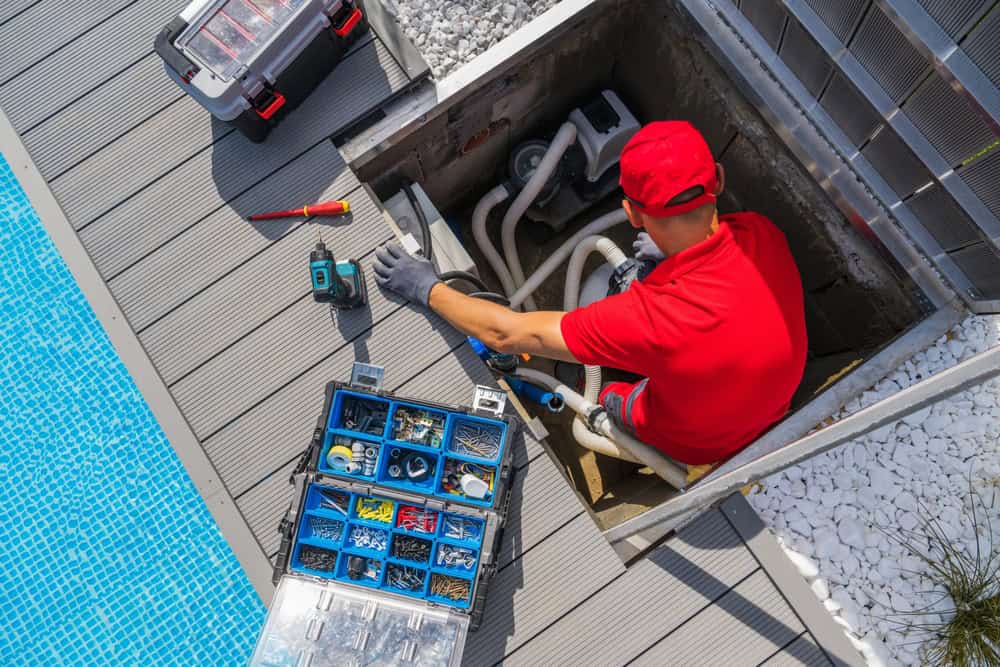
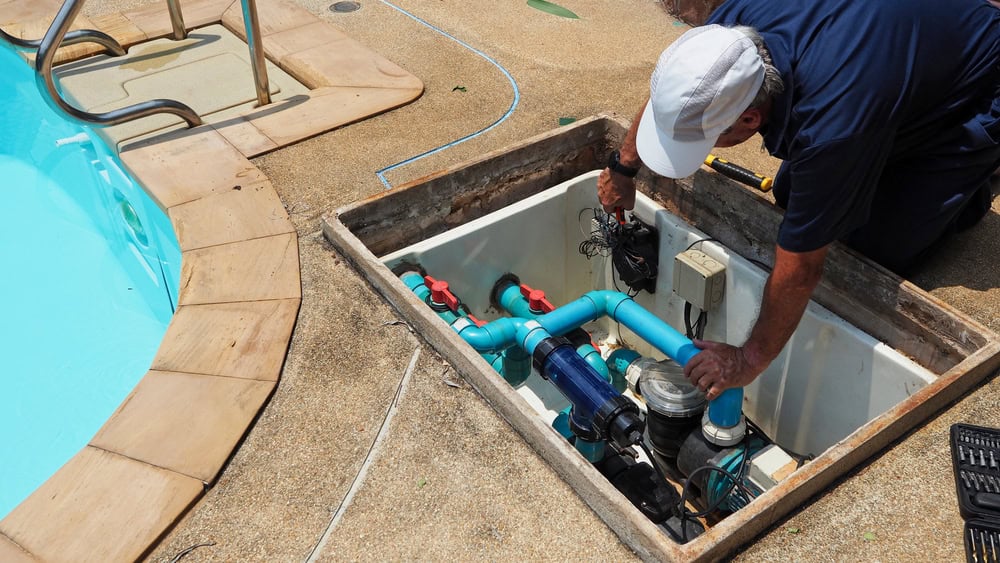
A pool pump is the heart of your circulation system. When it starts making noise, losing pressure, or stops working altogether, every hour of delay risks additional damage to the motor, impeller, and connected plumbing. It’s not a problem that gets better on its own, and it’s not a problem where a YouTube tutorial is a reliable guide.
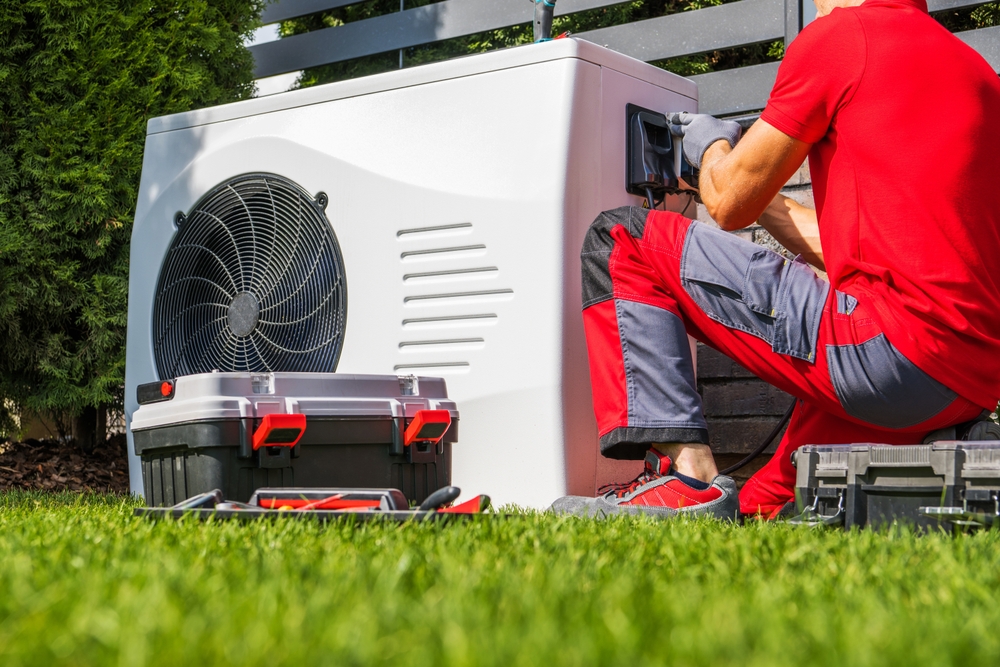
Pool pump repair involves electrical components, pressurized plumbing, and mechanical systems that interact in ways that aren’t always obvious. An incorrect repair attempt doesn’t just fail to fix the problem — it can void the manufacturer’s warranty, cause further damage downstream, and turn a $300 repair into a $1,500 pump replacement.

Most pool pump problems announce themselves before they become catastrophic — if you know what to listen and look for. The challenge is that many homeowners don’t notice the early signs until the pump has already been struggling for weeks.
A pump that’s louder than usual is often the first signal. Grinding, screeching, or rattling sounds typically point to bearing wear or debris caught in the impeller. A pump that runs but produces weak circulation — water moving slowly through returns, a filter pressure gauge that won’t climb to normal range — may have a clogged impeller, a failing capacitor, or an air leak somewhere in the suction line. A pump that trips the breaker repeatedly is a more serious electrical concern that needs professional diagnosis before anything else.
What makes pool pump repair genuinely tricky is that the symptoms often overlap. Weak circulation can come from a clogged impeller, a failing motor, a suction-side air leak, or a dirty filter that’s restricting flow. Diagnosing correctly requires testing each possibility systematically — not guessing and replacing parts until something works.
We use Pentair and Hayward equipment exclusively for repairs and replacements, which matters for two reasons. First, these are the most reliable and widely supported brands in the industry, meaning parts are available and quality is consistent. Second, using manufacturer-compatible parts keeps your equipment eligible for warranty coverage — something that goes out the window the moment an unqualified repair is attempted with off-brand components.
If your pump is making noise, losing flow, or behaving erratically, the right move is a professional diagnosis before the problem escalates. A repair addressed early almost always costs less than one that’s been deferred.
One of the most common points of confusion for pool owners is the line between ongoing maintenance and actual pool repair. They’re related, but they’re not the same thing — and understanding the difference helps you make smarter decisions about who you call and when.
Regular pool maintenance is the weekly work that keeps your pool operating as it should: chemistry balancing, cleaning, filter care, and equipment monitoring. It’s preventative by nature. Done consistently and correctly, it’s what keeps repairs from becoming necessary in the first place.
Pool repair is what happens when something breaks down or deteriorates despite — or because of — neglected maintenance. Cracked or deteriorating pool surfaces, leaking fittings, failing equipment, and damaged tile are all repair territory. These aren’t problems that weekly cleaning can fix, but they’re also problems that proper maintenance can delay significantly.
Leak detection is a good example of where the two categories intersect. A pool losing water faster than evaporation accounts for has a leak — and in Broward County’s heat, it can be easy to dismiss water loss as normal evaporation when it’s actually structural. An undetected leak doesn’t just waste water; it can erode the ground around your pool, damage surrounding concrete or decking, and cause equipment to run dry and overheat. The longer it goes unaddressed, the more expensive the repair becomes.
We handle leak detection as part of our service offering because it’s exactly the kind of problem that benefits from a professional eye. Locating a leak requires a systematic approach — pressure testing the plumbing, inspecting fittings and returns, checking the shell for cracks — not guesswork. And once we find it, we repair it. You’re not handed a diagnosis and left to find someone else.
For Broward County homeowners, the practical takeaway is this: a company that handles both maintenance and repair is more valuable than one that only does one or the other. When your technician knows your pool’s history, they’re better positioned to catch developing problems early — before a small issue becomes a costly pool repair project.
For most Broward County homeowners, the honest answer is yes — and not just because it saves time, though it does. It’s because the conditions here make consistent, knowledgeable maintenance genuinely difficult to replicate on your own. The heat, the UV intensity, the rainy season, the hurricane prep — these aren’t minor factors. They’re the reason a pool that looks fine on Monday can be a problem by Friday.
Professional pool maintenance isn’t a luxury in this climate. It’s a reasonable way to protect a significant investment, keep your water safe, and stop spending your weekends on a chore that came with the house.
If you’re in Broward County and you’re weighing your options, we’d encourage you to get a real quote before assuming DIY is the cheaper path. When you account for the full picture — chemicals, equipment, time, and the cost of the mistakes that eventually happen — the numbers are usually closer than you’d expect. We offer upfront pricing, flexible scheduling, and a satisfaction guarantee on our repair work, so you know exactly what you’re getting before we start.
Article details:
Share:
Continue learning: