Your backyard could look like a five-star resort — but only if the pool underneath is actually in good shape. Here's where to start.
Share:

Summary:
You’ve seen the backyards. Travertine decks, LED-lit water features, tanning ledges that look straight out of a Weston resort. And you’ve thought — why not mine?
Here’s the honest answer: for most Broward County homeowners, the gap between the backyard they have and the one they want isn’t a design problem. It’s a sequencing problem. The deck remodel, the new pavers, the upgraded lighting — none of it holds up if the pool underneath has a slow leak, a failing pump, or surface damage that’s been quietly getting worse. We’ve seen it happen. And it’s an expensive lesson to learn after the fact.
This is the guide that walks you through the right order of operations — starting with pool repair, and ending with the backyard you actually want.
Pool repair isn’t one thing. It’s a category that covers everything from patching a structural crack in the shell to replacing a pump motor that’s been struggling for two seasons. In Broward County’s climate — year-round sun, hurricane season, salt air along the coast — pools take a beating that pools in other parts of the country simply don’t. The wear is real, and it accumulates faster than most homeowners expect.
When we assess a pool for repair, we’re looking at the full picture: the surface condition, the equipment, the plumbing, the deck connections, and any signs of water loss. A pool that looks fine from the outside can have an active leak running under the deck, slowly saturating the soil and compromising the foundation of everything sitting on top of it. This is what we find on a regular basis across Pembroke Pines, Pompano Beach, and Hollywood.

This is the question we get more than almost any other, and it’s a fair one. In South Florida’s heat, evaporation is real — a pool can lose a quarter inch of water or more on a hot, dry day without anything being wrong. But there’s a straightforward way to check before you call anyone.
Fill a bucket with pool water and set it on the first or second step of the pool so it’s partially submerged. Mark the water level inside the bucket and on the pool wall. Come back in 24 hours. If the pool has lost significantly more water than the bucket, you have a leak. If they’ve dropped by roughly the same amount, you’re dealing with evaporation.
What makes this worth paying attention to in Broward County specifically is the soil. Much of the county sits on porous limestone and sandy substrate. A slow leak doesn’t just waste water — it migrates under your deck and can quietly erode the base that your pavers or concrete are sitting on. By the time you see the deck shifting or cracking, the damage has already been building for months. We’ve done leak detection on pools in Deerfield Beach and Coral Springs where the homeowner had no idea anything was wrong until a section of deck started to lift.
The signs to watch for: your water bill has crept up without explanation, you’re adding water to the pool more than once a week, the ground around the pool stays soggy after dry weather, or your chemical balance has become harder to maintain. Any one of those is worth a professional look.
Professional leak detection uses pressure testing and specialized equipment to isolate exactly where the water is going — whether it’s a crack in the shell, a fitting at the light housing, a skimmer connection, or something in the plumbing below the deck. Knowing the source before you start any repair work, and certainly before you invest in a deck remodel, is what separates a smart renovation from an expensive redo.
The pump is the heart of your pool’s circulation system. When it’s working right, you barely notice it. When it starts making noise — grinding, humming louder than usual, rattling, or cycling on and off — that’s the system telling you something has changed.
The most common culprits we find during pool pump repair calls in Broward County are worn bearings, a clogged impeller, air getting into the suction line, or a motor that’s simply reached the end of its service life. In a climate where pools run year-round, pump motors work harder and longer than they do in seasonal markets. A pump that might last twelve years in a northern state can show significant wear in seven to nine years here.
The practical question homeowners always ask is: repair or replace? The honest answer depends on the age of the unit, the nature of the failure, and what technology is currently available. If your pump is more than eight years old and the motor has failed, replacement often makes more financial sense — especially since variable speed pumps, which are now standard in most new installations, can reduce energy consumption significantly compared to older single-speed models. We use Pentair and Hayward equipment because the parts are reliable, the warranties are real, and we know exactly how they perform in South Florida conditions.
When we diagnose a pump issue, we tell you what’s wrong, what it will cost to fix it, what it will cost to replace it, and what we’d do if it were our pool. Upfront pricing isn’t a marketing line for us — it’s just how we operate.
One thing worth knowing: in Florida, replacing or repairing pool equipment isn’t something just anyone can legally do. A Certified Pool Operator credential — the CPO certification — does not authorize someone to install or replace pool equipment. That requires a licensed pool contractor. We hold Florida contractor license CPC-1460991, which means when we do the work, it’s done legally, documentably, and in a way that protects your home’s value and your insurance coverage.
Want live answers?
Connect with a DCP Pool Services expert for fast, friendly support.
The resort-style backyard trend isn’t slowing down. Across Broward County — from the master-planned communities of Weston to the waterfront neighborhoods of Fort Lauderdale — homeowners are investing in travertine decks, Baja shelves, LED lighting systems, and water features that turn a standard backyard pool into something that feels genuinely luxurious. Most pool remodeling projects in this range run between $8,000 and $25,000, depending on scope and materials.
That’s a meaningful investment. And it’s one that deserves a solid foundation — literally. Before a single paver gets set or a new surface goes down, the pool itself needs to be in sound condition. An active leak, a failing pump, or deteriorating plaster doesn’t pause because you’ve installed a beautiful new deck around it. It keeps doing what it was doing, just now underneath something expensive.
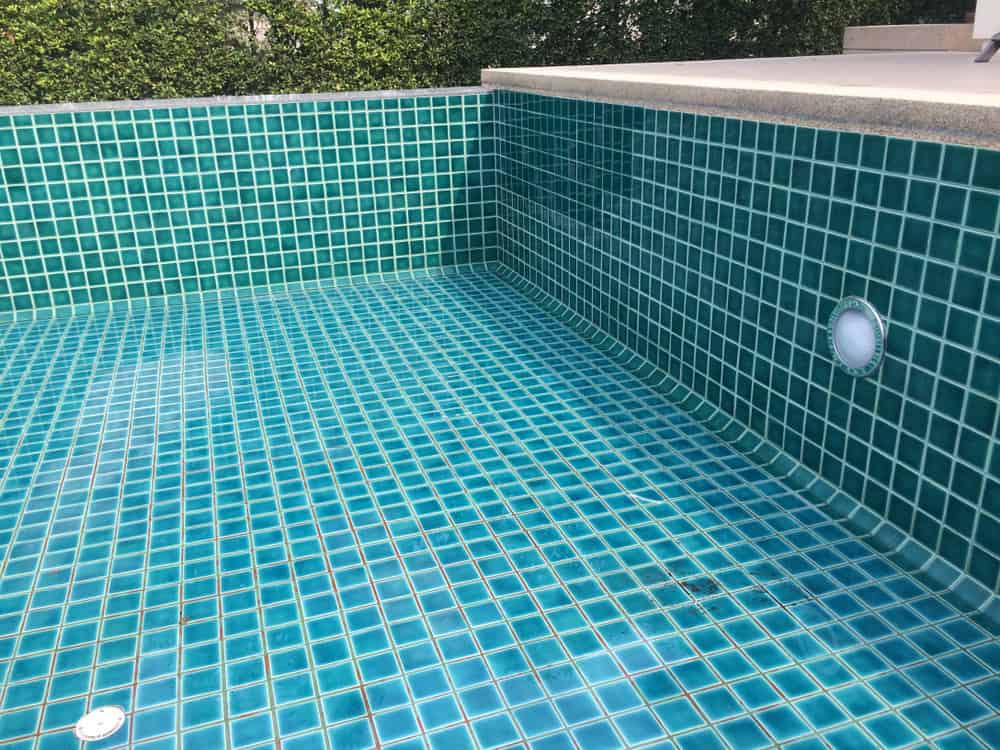
The right starting point for any pool renovation is an honest assessment of what you’re working with. That means looking at the pool surface — whether it’s marcite, plaster, pebble, or quartz — and evaluating how much life is left in it. It means checking the equipment: pump, filter, heater, automation system, saltwater cell if you have one. And it means confirming there are no active leaks before new decking goes in around the perimeter.
In Broward County’s coastal communities — Pompano Beach, Deerfield Beach, Hollywood — salt air corrosion is a real and specific issue that accelerates wear on metal fittings, equipment housings, and pool coping. Homeowners in these areas often find that equipment they thought had a few more years shows accelerated degradation when it gets a proper inspection. Catching that before a renovation rather than after is the difference between a clean project and an ugly surprise.
Pool resurfacing is often the right move before a deck remodel, not after. Once the surface is fresh and the equipment is confirmed to be in good working order, the renovation investment you make on top of it is protected. The new travertine, the upgraded lighting, the automation system — all of it performs the way it’s supposed to when the infrastructure underneath is sound.
We also want to be straightforward about permits. Structural pool repairs, equipment replacement, and certain deck modifications require permits under Florida Building Code. A licensed contractor can pull those permits. An unlicensed operator cannot. If work is done without the appropriate permits, it can create complications when you sell the home or file an insurance claim. It’s worth asking any contractor you consider — not just us — whether they’re pulling permits for the work they’re doing.
Here’s something that doesn’t get said enough: the most expensive pool repairs are almost always the result of deferred maintenance. A pool that gets consistent, professional attention — weekly chemical balancing, equipment checks, surface brushing, filter cleaning — rarely develops the kind of problems that require major intervention. The pools we see that need significant repair work are usually the ones that went too long between service visits or were maintained inconsistently.
In Broward County, where pools are in use every month of the year, the case for regular pool maintenance is even stronger than it is in other markets. Algae can establish itself within days in South Florida’s heat and humidity. Without consistent chemical balancing, the water chemistry shifts, and that shift accelerates wear on pool surfaces and equipment. A pool that looks clean to the eye can have chemistry that’s slowly degrading the plaster or corroding the pump housing.
Our weekly pool maintenance service covers the full scope: skimming, vacuuming, brushing walls and steps, chemical testing and balancing, and equipment inspection. We use microfiltration-equipped vacuums that pull out particles that standard equipment misses. And because we’re in the pool every week, we catch small problems — a crack starting to form, a fitting that’s showing wear, a filter that’s losing pressure — before they become repair calls.
This is especially relevant if you’ve just completed a renovation. A fresh pool surface and new equipment represent a real investment. Protecting that investment means keeping the water chemistry right and catching any issues early. We’ve had clients come to us originally for a one-time repair and transition to weekly maintenance once they saw how much easier it made their life.
After hurricane season passes each year, we also recommend a post-storm equipment inspection for any pool in Broward County. Power surges, debris, flooding, and ground movement can all affect pool equipment and structural integrity in ways that aren’t always visible immediately. Catching that early keeps a manageable situation from becoming a major repair.
The resort-style backyard is achievable. But it starts with knowing what condition your pool is actually in — not assuming, not hoping, but knowing. A professional assessment covers the surface, the equipment, the plumbing, and any signs of water loss, and it gives you a clear picture of what needs to happen before you invest in the aesthetic upgrades you’ve been thinking about.
Whether you’re dealing with a pump that’s been making noise for a few months, a water level that keeps dropping, a deck that’s showing cracks, or a pool that just hasn’t been serviced consistently — the answer is the same. Get the foundation right first. Everything else follows from there.
If you’re in Fort Lauderdale, Coral Springs, Weston, Pembroke Pines, Pompano Beach, or anywhere else in Broward County, FL, we’re the team to call. Reach us at 954-774-4334, Monday through Saturday, and we’ll give you a straight answer about what your pool needs — and what it doesn’t.
Article details:
Share:
Continue learning:

Ready for a Pool You'll Love?
Contact us today for a free quote!
DCP Pool Services
Company
Useful Links