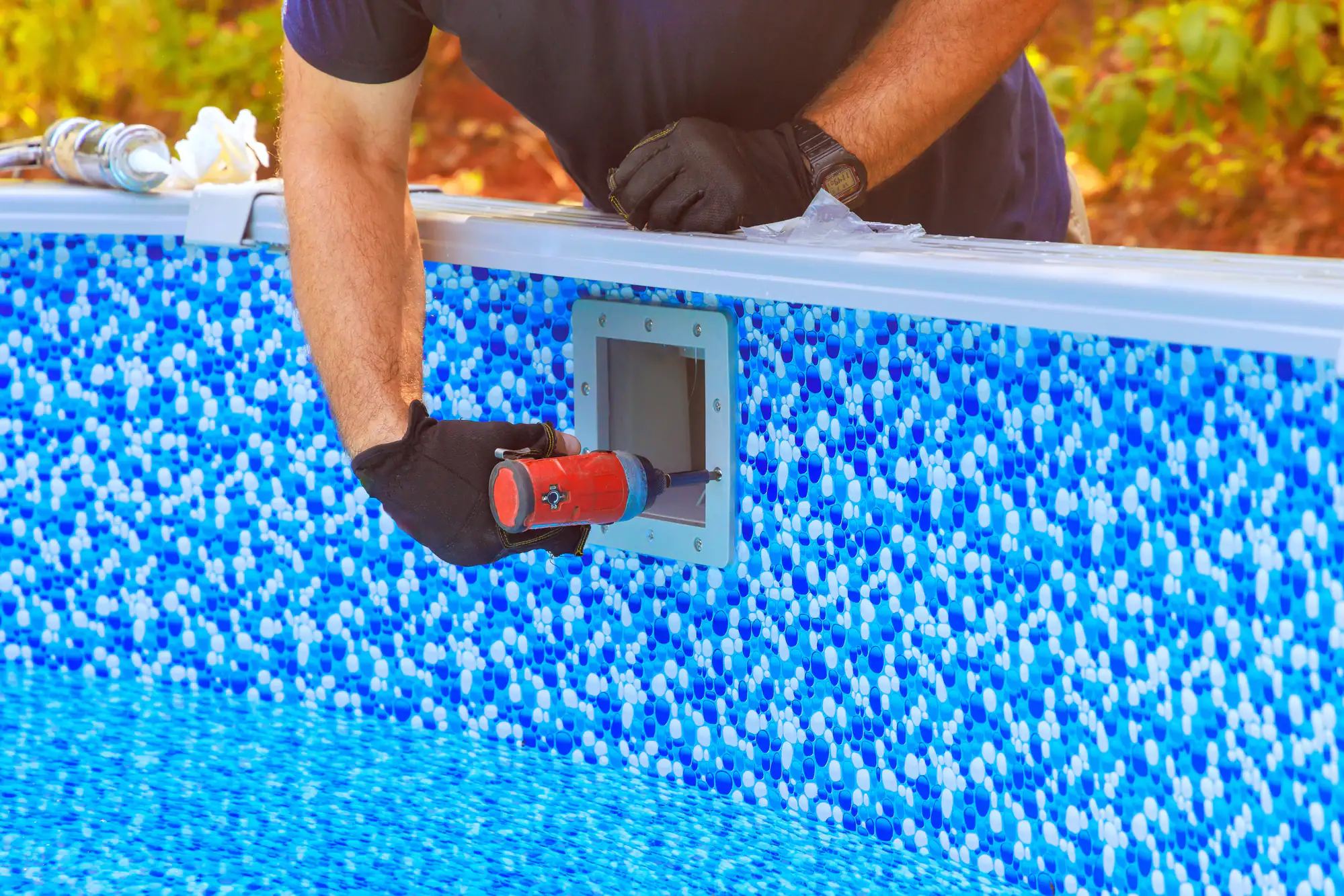
Everything Broward County pool owners need to know about keeping their water clean, safe, and swim-ready — all year long.
Share:

Summary:
Pool ownership in Broward County is genuinely great — until the water turns green, the pump starts making a noise you’ve never heard before, or you realize you’ve spent more time managing chemicals than actually swimming. It happens to a lot of homeowners here, and it’s usually not because they don’t care. It’s because South Florida’s climate is genuinely unforgiving when it comes to pool water. The heat, the rain, the humidity — they all work against you. This guide covers what good pool maintenance actually looks like in this climate, what to watch for with your equipment, and how to know when a problem is worth calling us in to handle.
Most people think pool maintenance means adding chlorine and skimming out leaves. That’s part of it, but it’s a small part. Real pool maintenance covers water chemistry testing and adjustment, filter cleaning, pump and equipment checks, vacuuming, brushing the walls and floor, and keeping an eye on anything that looks off before it turns into a repair.
In Broward County specifically, weekly service isn’t a upsell — it’s the honest minimum. Florida’s rainy season runs from May through October, and heavy daily rainfall dilutes your chemicals faster than most people expect. Add in the year-round UV exposure, high bather loads during summer, and the heat that accelerates algae growth, and you’re looking at a pool that needs consistent, knowledgeable attention every single week.

Water chemistry is where most DIY pool owners run into trouble, and it’s easy to understand why. There are multiple parameters that all need to be in range at the same time — pH, total alkalinity, chlorine or sanitizer levels, calcium hardness, and phosphate levels. Getting one wrong throws off the others, and the result is either cloudy water, algae, or water that’s actively irritating to swimmers’ eyes and skin.
pH is the most talked-about, and for good reason. When it drifts too high, chlorine loses most of its effectiveness — meaning your pool can look fine while barely being sanitized. When it drops too low, the water becomes corrosive and starts damaging your equipment and surfaces over time. The target range is 7.4 to 7.6, and it needs to be checked every single visit, not once a month.
Alkalinity acts as a buffer that keeps your pH stable. Without it in range — generally 80 to 120 parts per million — your pH will swing unpredictably no matter how much you adjust it. Calcium hardness matters too, especially in Broward County where water that’s too soft will start pulling calcium from your pool’s plaster or tile grout to compensate.
Phosphates deserve a mention here because they’re often ignored. They come in through rainwater, lawn fertilizers, and debris, and they’re essentially food for algae. Even if your chlorine levels look fine on paper, high phosphates can fuel an algae bloom that seems to come out of nowhere. We include phosphate removal as part of regular maintenance — something that makes a real difference in pools throughout Broward County.
One more thing worth saying: clear water is not the same as safe water. A pool can look perfectly clean while having chemical levels that are completely off. The only way to know is to actually test it.
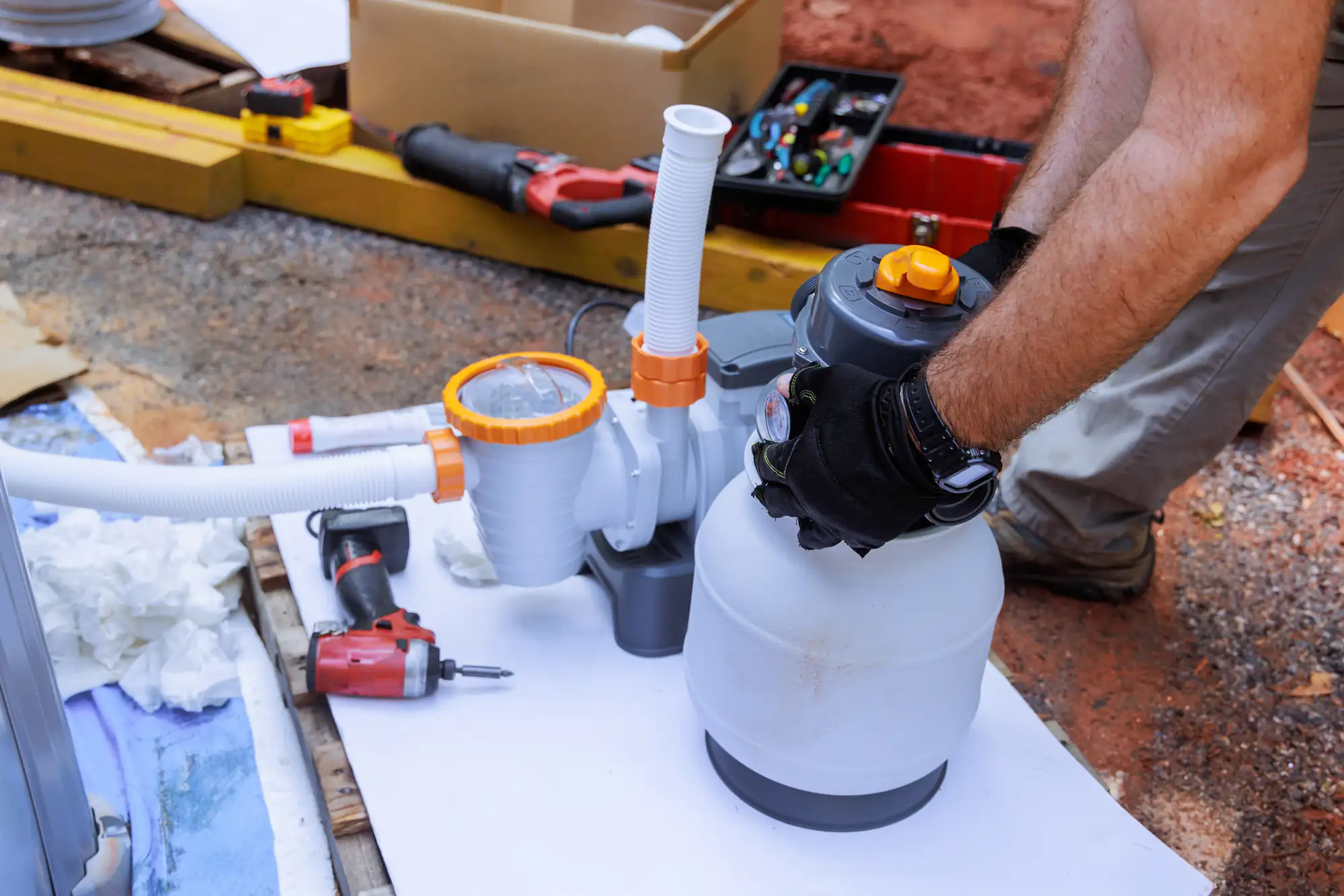
Your filter and pump are the engine of your pool. If they’re not running correctly, no amount of chemical balancing will keep your water clear. The pump circulates water through the filter, which traps debris, bacteria, and contaminants. When either one starts underperforming, water quality drops fast.
For the filter, what needs to happen depends on the type you have. Cartridge filters need to be removed and rinsed regularly — typically every two to four weeks depending on use and debris load. Sand filters require backwashing when the pressure gauge climbs eight to ten PSI above its clean baseline. DE filters need to be backwashed and recharged with fresh diatomaceous earth. None of these are complicated tasks, but they do need to happen on a consistent schedule. A clogged filter doesn’t just reduce water clarity — it puts extra strain on your pump motor.
Speaking of pumps, pool pump repair is one of the most common service calls we handle in Broward County, and most of them could have been avoided. The warning signs are usually there weeks before a pump fails completely: a humming noise without the motor turning over, reduced water flow at the return jets, air bubbles coming back into the pool, or a pump basket that’s always dry. Any of these is worth looking into immediately.
Pump repairs, when caught early, are often straightforward — a worn seal, a clogged impeller, a small air leak at a fitting. Left alone, those same issues lead to full motor failure, which means a full replacement. Depending on your system, that’s a $600 to $2,500 repair that most homeowners would rather avoid. Regular equipment checks during every maintenance visit are how you catch these things before they become expensive.
Variable speed pumps, which are increasingly common in Broward County homes, are more energy-efficient but have their own set of maintenance considerations. They run at lower speeds for longer periods, which is great for filtration but means the motor runs more total hours over its lifetime. Keeping the pump basket clean and the impeller clear is especially important with these systems.
Want live answers?
Connect with a DCP Pool Services expert for fast, friendly support.
Even a well-maintained pool eventually needs repairs. Equipment wears out, surfaces age, and South Florida’s weather puts stress on pools that most climates simply don’t. Knowing the difference between a maintenance issue and a repair issue saves you time, money, and a lot of frustration.
The most common pool repairs we handle in Broward County involve equipment failures, surface wear, tile and grout damage, and leaks. Some of these develop slowly over months. Others — particularly after a major storm — can show up overnight. Either way, catching them early is almost always cheaper than waiting.

Pool leaks are more common than most people realize, and they’re also one of the most misdiagnosed problems in pool ownership. A lot of homeowners assume water loss is just evaporation, especially in Broward County’s heat. And some of it is — a pool in South Florida can lose a quarter to half an inch of water per day to evaporation alone during hot, dry stretches. But if you’re consistently losing more than that, or if your water level drops noticeably overnight, there’s a good chance you have a leak.
The bucket test is a simple way to check. Fill a bucket with pool water, set it on a step so it’s partially submerged, and mark the water level inside and outside the bucket. After 24 hours, compare the two. If the pool lost significantly more water than the bucket, evaporation isn’t the full explanation.
Leaks can come from a lot of places — the shell itself, the plumbing lines, the skimmer, fittings around lights or returns, or the equipment pad. Finding the source without professional equipment is genuinely difficult. We use electronic leak detection tools that can pinpoint problems without tearing up your deck or landscaping, which matters a lot when you’re dealing with a finished pool area.
Left unaddressed, even a small leak gets expensive. You’re constantly adding water and chemicals to compensate, which drives up your water bill and your chemical costs. More importantly, a leak in the shell or plumbing can erode the surrounding soil over time, which creates structural problems that cost far more to fix than the original leak would have.
If your water bill has crept up without explanation, or if you’re adding water more often than you used to, it’s worth having someone take a look. In our experience serving homeowners across Broward County — from Coral Springs and Plantation to Pembroke Pines and Hollywood — leaks are almost always smaller and easier to fix than people fear, as long as they’re caught before they’ve been running for months.
This is something that doesn’t come up in generic pool maintenance guides, but it’s very real if you own a pool in South Florida. Hurricane season runs from June through November, and even a tropical storm that doesn’t make direct landfall can drop several inches of rain in a matter of hours, blow debris into your pool, and throw your water chemistry completely out of balance.
After any significant storm, the first thing to do is check your equipment before you turn anything on. Flooding around the equipment pad, debris caught in the pump basket or skimmer, or damage to electrical components can all cause serious problems if you fire up the system without looking first. If there’s any question about whether the equipment got wet or was submerged, wait and have a technician check it out.
Once the equipment is confirmed safe, the water itself needs attention. Heavy rain dilutes chlorine levels and drops your pH, which creates near-ideal conditions for an algae bloom. The warmer the water — and in Broward County it’s almost always warm — the faster algae takes hold. A pool that was perfectly balanced before the storm can turn green within 48 to 72 hours if the chemistry isn’t corrected quickly.
Debris removal matters too, and not just for aesthetics. Leaves, dirt, and organic material sitting on the pool floor consume chlorine and feed algae. Vacuuming the pool and cleaning the filter after a storm is not optional maintenance — it’s urgent maintenance.
We offer post-storm service throughout Broward County, including emergency same-day visits when the situation calls for it. If your pool took a hit after a storm and you’re not sure where to start, that’s exactly the kind of call we’re set up to handle. The sooner the water gets tested and treated, the less likely you are to be looking at a full algae remediation job a few days later.
Keeping a pool in good shape in Broward County takes more consistency than most people expect going in. The climate works against you year-round — the heat, the rain, the storms, the UV exposure. None of it lets up. But a pool that gets proper weekly attention, with real water testing and equipment checks every visit, stays clear, safe, and ready to use without becoming a second job.
The difference between a pool that’s always swim-ready and one that’s always one rainstorm away from turning green usually comes down to who’s maintaining it and how seriously they take the details. If you’ve been dealing with recurring water problems, unreliable service, or just want to know your pool is actually being taken care of — not just visited — we’d be glad to show you what consistent, documented pool maintenance looks like.
Reach out to us to get started. We’re based in Broward County, we know this climate, and we’ll give you a straight answer on what your pool needs.
Article details:
Share:
Continue learning:
Ready for a Pool You'll Love?
Contact us today for a free quote!
DCP Pool Services
Company
Useful Links