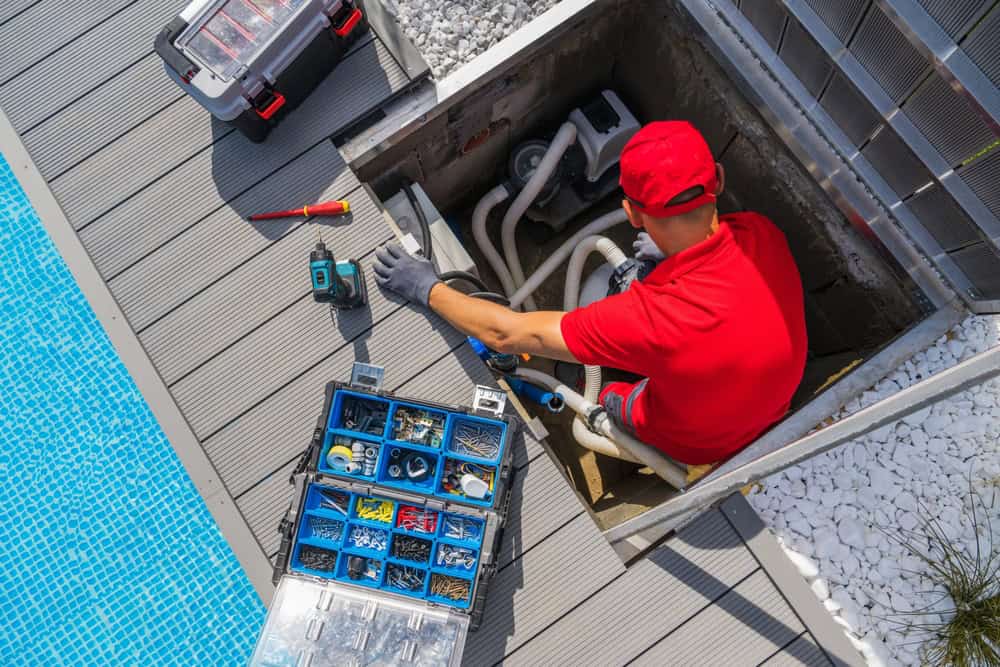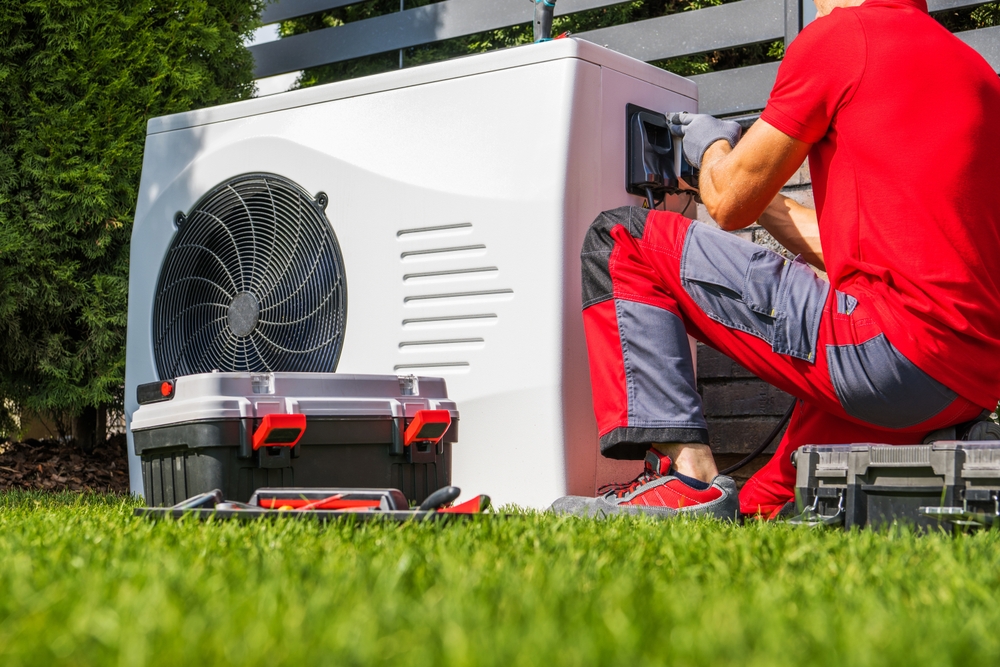
Your pool pump works hard in South Florida's heat. Here's how to keep it running longer — and stop it from draining your wallet.
Share:
Summary:
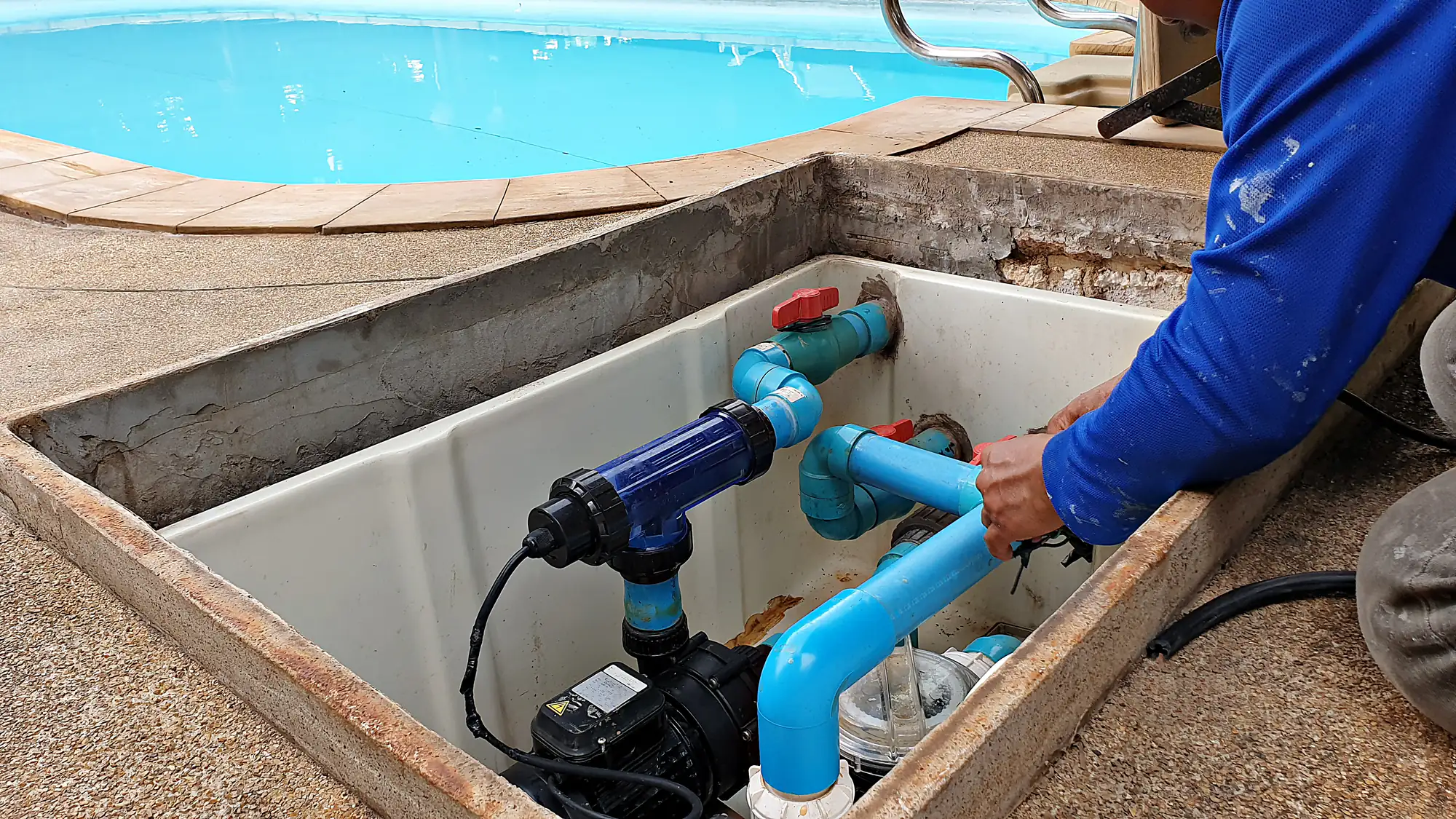
Your pool pump runs almost every day of the year. In Broward County, there’s no off-season — no three-month break where the equipment gets to rest. It’s running through the summer heat, through hurricane season, through those long stretches of humidity that don’t let up until November. That kind of continuous use adds up, and most pumps don’t fail because of one dramatic moment. They fail because of small, preventable things that were ignored for too long. The good news is that with a few straightforward habits, you can add years to your pump’s life and meaningfully reduce what you’re paying on your FPL bill every month.
Most pool care guides are written for a national audience — and that means they’re written for places where pools sit dormant half the year. That’s not Broward County. Here, your pump runs 365 days a year, which means it accumulates operating hours two to three times faster than a pump in, say, Ohio or Colorado. A pump that might last 12 years in a northern climate can wear out significantly sooner here if it isn’t given the right attention.
Then there’s the environment itself. If you live near the coast — Pompano Beach, Deerfield Beach, Lauderdale-by-the-Sea — salt air is a real factor. It accelerates corrosion on motor housings, electrical connections, and metal components in ways that inland homeowners simply don’t deal with. Add in the intense UV exposure, the daily summer thunderstorms that drop debris into your pool, and the occasional hurricane, and you’ve got conditions that demand a more proactive approach to pool pump maintenance than the average how-to article accounts for.
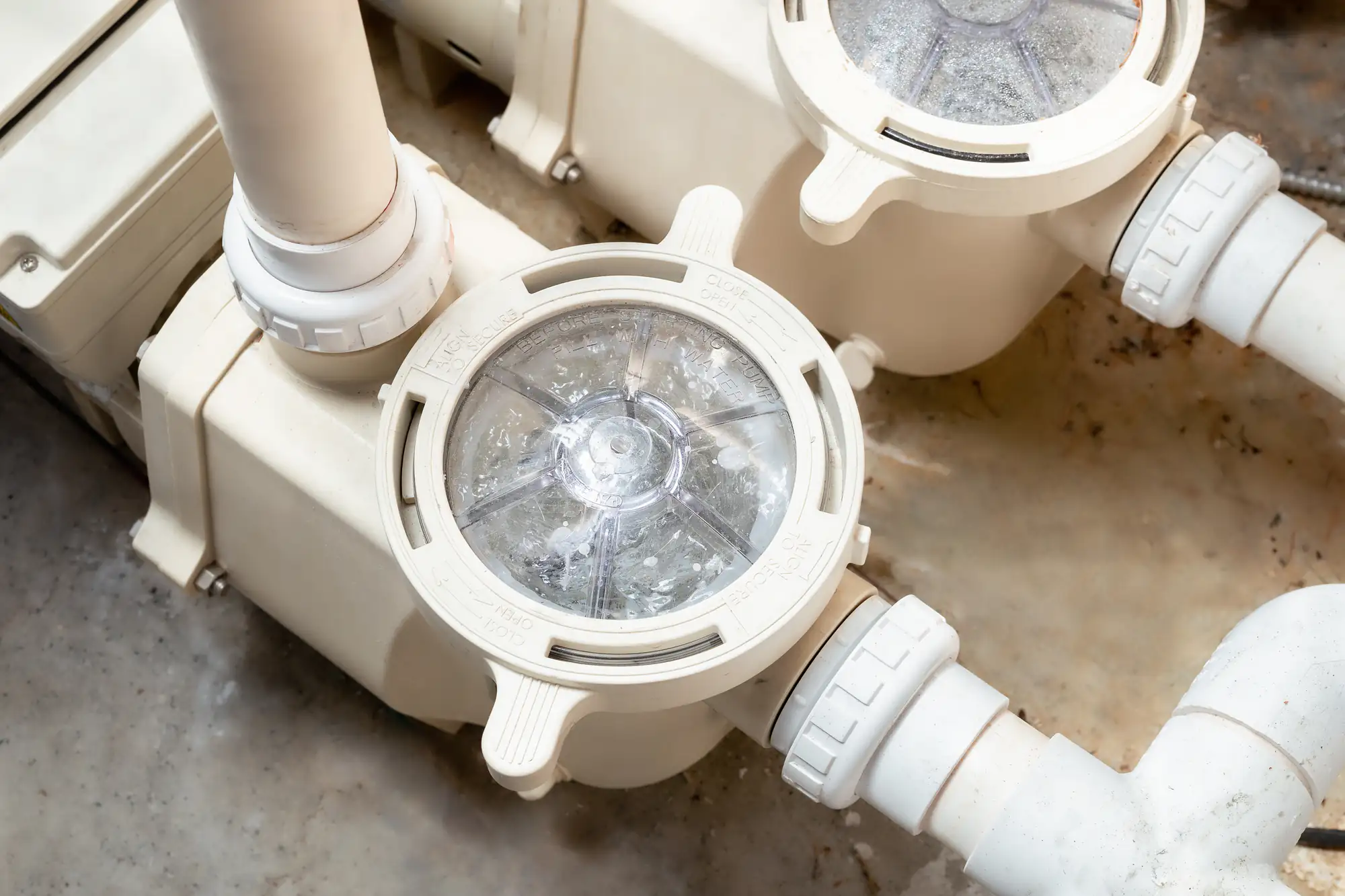
The pump strainer basket is one of the most overlooked parts of routine pool maintenance — and one of the most important. Its job is to catch leaves, debris, and anything else that gets pulled through the system before it reaches the impeller. When it fills up, the pump has to work harder to pull water through. That extra strain puts stress on the motor, overheats the bearings, and quietly shortens the life of the whole unit.
In most parts of the country, checking the basket every week or two is enough. In Broward County, especially during the summer monsoon season from June through September, that schedule needs to move faster. Daily afternoon thunderstorms can drop a surprising amount of debris into your pool overnight. After any significant storm — and certainly after a named tropical system — the basket should be your first stop before you even think about water chemistry.
The process itself takes five minutes. Turn off the pump, remove the basket, rinse it out with a hose, check for cracks or warping, and reinstall. That’s it. It’s the lowest-effort, highest-impact maintenance task you can do, and it’s the one most people skip. A clogged basket doesn’t just reduce circulation — it can trigger a condition called cavitation, where the pump draws in air instead of water, which causes rapid mechanical damage that a simple cleaning could have prevented entirely.
If you’re finding the basket fills up unusually fast, or if you’re noticing reduced water flow even after cleaning it, that’s worth a call to a professional. It could point to a partially blocked impeller or a suction-side issue that isn’t visible from the outside.
The short answer is: not directly. But running your pump at the wrong time absolutely costs you money, and that financial pressure often leads homeowners to run it less — which does shorten its life by allowing algae and chemistry problems to develop.
Here’s what actually matters. In Broward County, Florida Power & Light offers time-of-use rate structures where electricity costs more during peak demand hours, typically mid-afternoon. If your pump is running at full speed from noon to 4 PM every day, you’re paying peak rates for the most energy-intensive part of the cycle. Shifting that run time to early morning or late evening — when rates are lower — can make a noticeable difference on your monthly bill without changing how clean or clear your pool stays.
The bigger opportunity, though, is upgrading to a variable-speed pump if you haven’t already. This isn’t just a suggestion — it’s increasingly a legal requirement. As of 2021, the U.S. Department of Energy banned the sale of most new single-speed pumps over 0.711 horsepower for residential use. And starting September 2025, new DOE regulations extend those requirements further, mandating that any replacement pool pump motor over 1 HP must be a DOE-approved variable-speed model.
The energy math behind variable-speed pumps is striking. According to the DOE, a variable-speed pump can cut energy consumption by up to 90% compared to a conventional single-speed unit. The reason comes down to physics: slowing a pump by half doesn’t use half the energy — it uses one-eighth the energy. So running a variable-speed pump for 16 hours at low RPMs moves the same volume of water as 8 hours at full speed, but at a fraction of the cost. For a Broward County homeowner paying FPL rates year-round, that adds up quickly. The DOE estimates pool owners save an average of $2,000 over the lifetime of a more efficient pump.
Want live answers?
Connect with a DCP Pool Services expert for fast, friendly support.
At some point, your pump is going to give you a sign that something’s wrong. Maybe it’s a grinding or screeching noise when it starts up. Maybe it’s tripping the breaker. Maybe the water just doesn’t look right, and you’ve already checked the chemistry. These are the moments when most homeowners face a decision they’re not sure how to make: do you repair it, or replace the whole thing?
The honest answer is that it depends — and anyone who tells you otherwise before actually diagnosing the pump isn’t giving you real information. A cracked pump housing typically means replacement. But a failed capacitor, worn bearings, or a leaking shaft seal? Those are often fixable for a couple hundred dollars. The problem is that some service companies default to recommending full replacement because it’s a larger job. We approach it differently. We show up, we diagnose honestly, and we tell you what’s worth fixing and what isn’t.
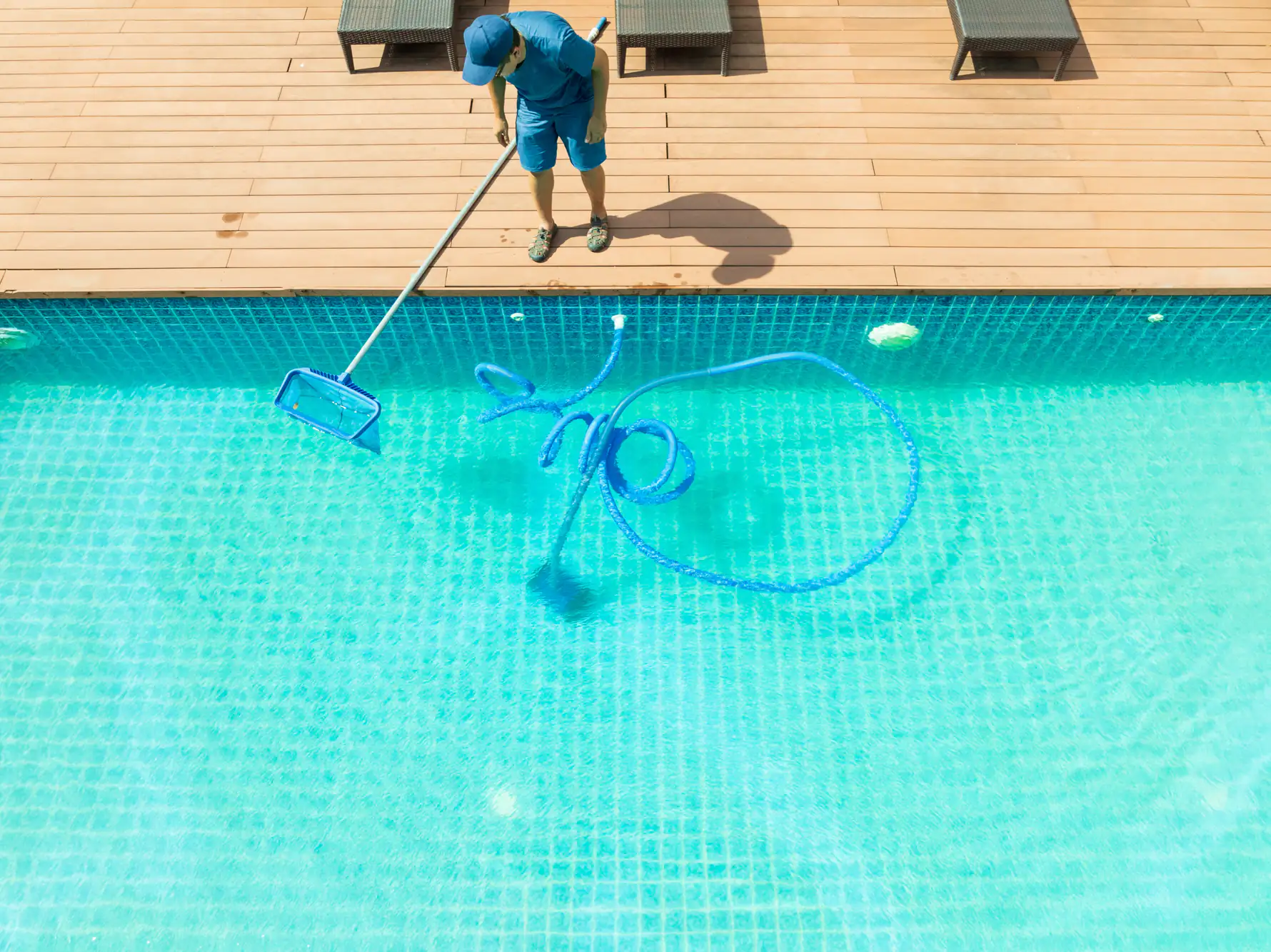
Pool pumps rarely fail without warning. The signals are usually there for weeks before the motor gives out — most homeowners just don’t know what to listen or look for.
Unusual noise is the most common early indicator. A healthy pump runs with a consistent, relatively quiet hum. If you’re hearing a high-pitched screech, a grinding sound, or a repetitive clicking when the pump cycles on, those are signs of mechanical wear — typically in the bearings or motor windings. Catching this early is the difference between a repair that costs a few hundred dollars and a full motor replacement that costs significantly more.
Reduced water flow is another signal worth taking seriously. If your pool is taking longer to clear after adding chemicals, or if the pressure gauge on your filter is reading higher than normal, the pump may not be moving water efficiently. This can be caused by a partially blocked impeller, a worn impeller vane, or a developing seal leak that’s allowing air into the suction line. None of these are visible from the outside, which is why a professional diagnosis matters.
The third warning sign is the one that shows up on your FPL bill before it shows up anywhere else: a sudden, unexplained increase in energy consumption. An aging pump motor that’s losing efficiency draws more power to maintain the same output. If your electricity costs have crept up and nothing else in the house has changed, the pool pump is worth investigating.
In Broward County’s climate, these issues tend to develop faster than in drier, cooler markets. High humidity promotes corrosion inside the motor housing. Salt air — especially for homes in coastal cities like Hallandale Beach or Pompano Beach — attacks metal components over time. And the sheer number of operating hours a South Florida pump accumulates means wear happens on an accelerated timeline. Annual inspections, ideally before hurricane season begins in June, are the most reliable way to catch problems before they become emergencies.
Most people think of water chemistry as a swimmer safety issue — and it is. But it’s also a significant factor in how long your pump and other equipment last. The two are more connected than most homeowners realize.
When your pool’s pH runs too low, the water becomes acidic. Acidic water corrodes metal components inside the pump — the impeller, the shaft, the housing fittings. Over time, that corrosion degrades the pump’s ability to move water efficiently and weakens structural components that aren’t designed to be replaced piecemeal. High chlorine levels compound this effect, particularly in pools that aren’t running a saltwater system with a properly calibrated generator.
On the other end of the spectrum, water that’s too hard — high in calcium — causes scale to build up inside the pump housing and along the impeller. That scale restricts flow, forces the motor to work harder, and eventually creates the same kind of strain as a partially blocked strainer basket. Broward County’s municipal water supply has its own mineral profile, and homes in cities like Coral Springs, Weston, and Pembroke Pines that draw from the same regional water treatment system often deal with similar hardness levels. It’s worth knowing your baseline and testing regularly, not just when something looks off.
Proper chemical balancing isn’t just about keeping the water clear and safe — it’s a form of pump protection. A pool that’s consistently balanced puts less chemical stress on every piece of equipment it contacts. We handle chemical balancing as part of our regular maintenance service, and it’s one of the reasons clients who’ve been with us for years tend to have pumps that outlast the industry average. The goal isn’t to sell more service visits — it’s to help you avoid the kind of repair or replacement call that nobody wants to make in the middle of July.
If your pool chemistry has been inconsistent, or if you’ve been managing it yourself and aren’t fully confident in the results, that’s worth addressing sooner rather than later. The cost of a professional chemical adjustment is a fraction of what it costs to replace corroded pump components.
The through-line in all of this is pretty simple: pool pumps that get consistent attention last longer and cost less to operate than pumps that only get looked at when something goes wrong. In Broward County’s year-round pool climate, that’s not just good advice — it’s the difference between a pump that hits its full 10-to-12-year lifespan and one that gives out in half that time.
Clean the strainer basket regularly, especially after storms. Keep your water chemistry balanced. Pay attention to changes in sound, flow, or your energy bill. And if something doesn’t seem right, get a real diagnosis before agreeing to a repair or replacement — because the right answer isn’t always the most expensive one.
If you’re in Fort Lauderdale, Hollywood, Coral Springs, Miramar, or anywhere else across Broward County and you want a straight answer about what your pump actually needs, we’re the team to call. We show up, we diagnose honestly, and we tell you what’s worth fixing and what isn’t.
Article details:
Share:
Continue learning: