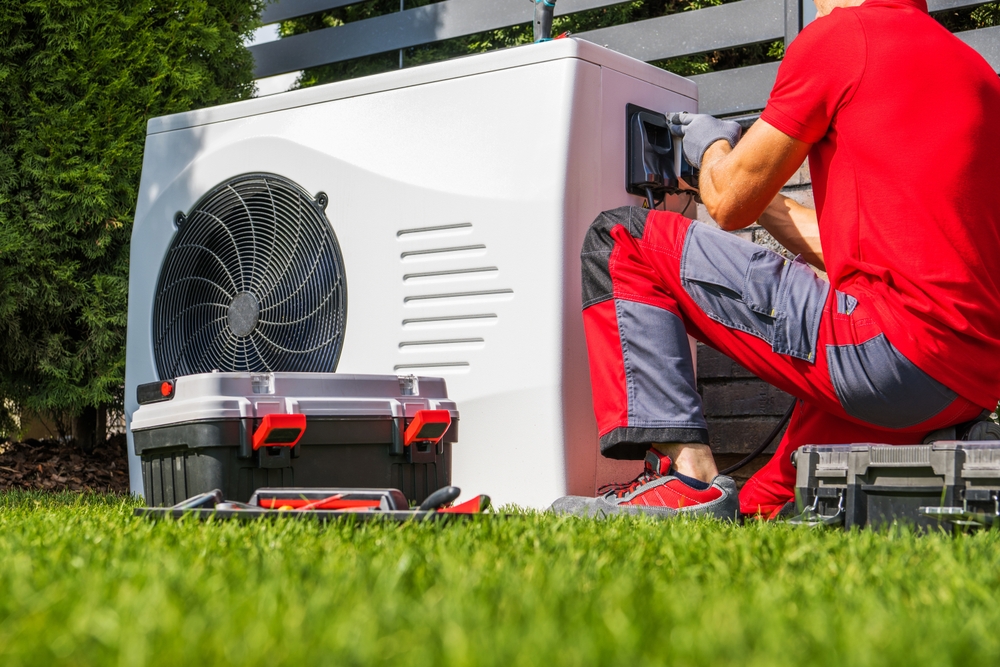
August isn't just hot — it's the month Broward County pools are most likely to turn green. Here's the science behind it and what actually works.
Share:
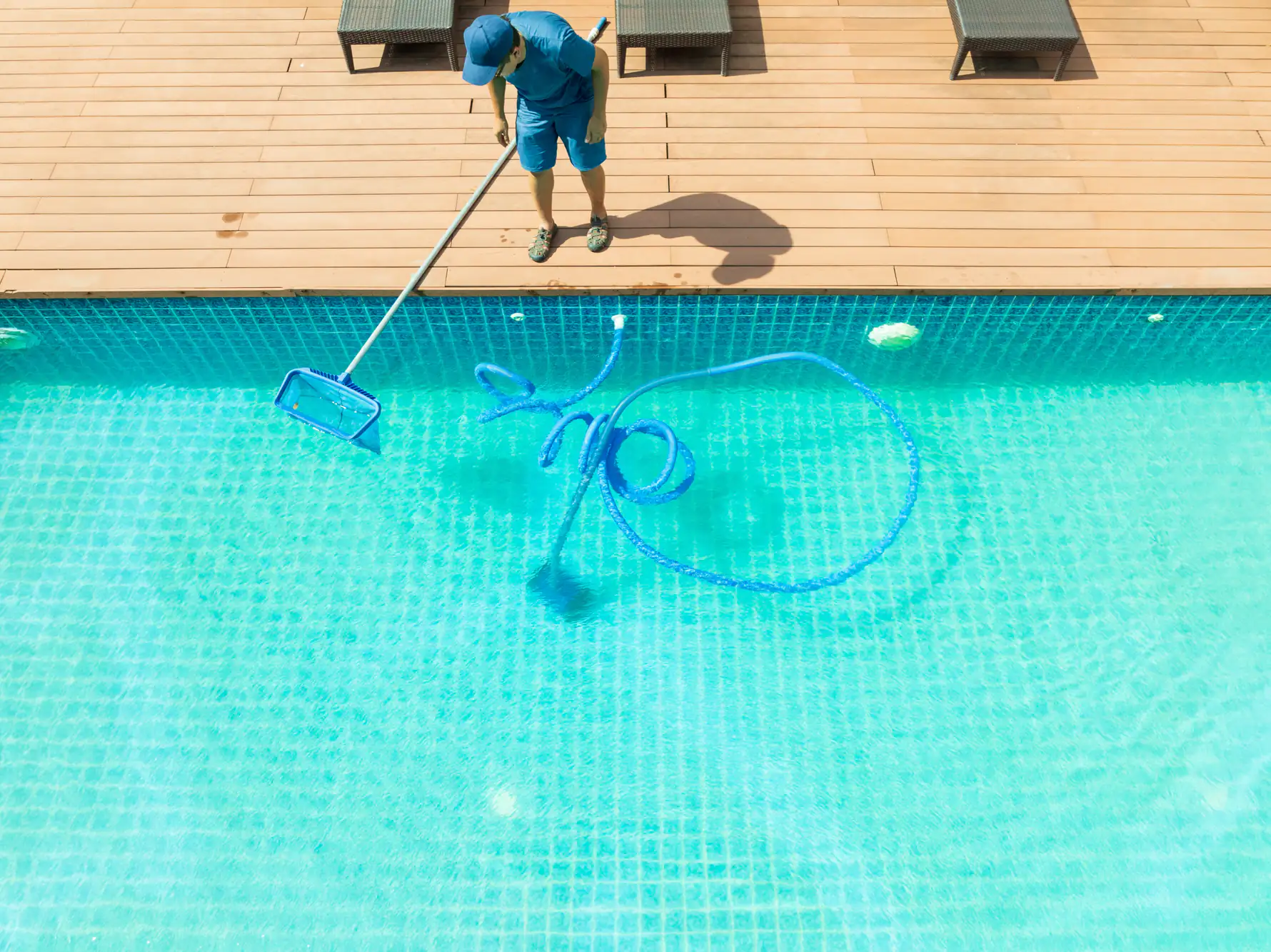
Summary:
You checked your pool on a Friday evening and the water was fine. Saturday morning, it’s green. That’s not bad luck — that’s Broward County in August.
The combination of peak water temperatures, daily afternoon thunderstorms, and months of accumulated chemicals creates conditions that can turn a clear pool into an algae bloom in 24 to 48 hours. And if you’ve already tried shocking it twice this month without lasting results, the problem runs deeper than algae.
Here’s what’s actually happening in your water — and what it takes to get ahead of it before late summer turns your backyard into a project.
June and July get all the attention when people talk about summer pool maintenance. But in Broward County, the real danger window is late summer — August through September — and most homeowners don’t see it coming until it’s already there.
By August, your pool has been fighting South Florida’s heat and UV intensity for months. Water temperatures are sitting at 85 to 90 degrees. Chlorine demand has roughly doubled compared to cooler months. The rainy season is at full intensity, with afternoon thunderstorms hitting nearly every day. And the chemicals you’ve been using all summer have quietly been building up in ways that make your pool harder to protect, not easier.
Rain feels harmless. It’s just water, right? In Broward County, it’s one of the primary triggers for algae blooms — and it works fast.
A single heavy afternoon storm can drop your pool’s free chlorine level by 50 percent or more. That’s not a gradual decline you can manage over a few days. That’s an immediate crash that leaves your pool chemically exposed for hours, sometimes overnight, in water that’s warm enough to grow algae at an accelerated rate. When chlorine falls below 1.0 ppm and the water is sitting at 88 degrees, algae doesn’t wait around.
But the chlorine crash is only part of it. Those same storms are washing across your lawn, your landscaping, your neighbors’ yards, and the HOA-maintained green spaces throughout communities like Weston, Coral Springs, and Pembroke Pines. All of that fertilizer-laden runoff carries phosphates directly into your pool. Phosphates are algae’s food source. When levels climb above 100 parts per billion, algae growth accelerates significantly — and by late summer, pools that haven’t had phosphate management all season are essentially running a buffet.
Then there’s the pH disruption. South Florida rain is slightly acidic, and repeated heavy storms push your pH down while simultaneously diluting your alkalinity buffer. That makes it harder for chlorine to do its job even when levels look adequate on a test strip. The chemistry is fighting itself.
This is why post-storm pool care in Broward County isn’t optional maintenance — it’s an acute event that requires a specific response. Testing free chlorine, pH, and alkalinity after every significant storm, then correcting in the right sequence, is what separates a pool that recovers in a day from one that’s green by the following weekend.
Here’s the part that most homeowners — and honestly, a lot of pool services — don’t talk about. By August, many Broward County pools have a cyanuric acid problem.
Cyanuric acid, often called CYA or stabilizer, is added to outdoor pools to protect chlorine from UV degradation. In South Florida’s intense sun, that protection is genuinely necessary. The problem is that CYA accumulates over time. Every stabilized chlorine tablet you add raises your CYA level slightly. By late summer, after months of consistent use, many pools are sitting at CYA levels above 80 to 100 parts per million.
At that concentration, something called chlorine lock sets in. Your pool can test at a normal chlorine level and still be completely unable to kill algae. The CYA essentially neutralizes the chlorine before it can work. You add shock, the numbers look fine, and the algae comes right back — because the shock was never actually effective in the first place.
This is the most common reason homeowners find themselves shocking their pool repeatedly through August with no lasting results. It’s not that the algae is unusually stubborn. It’s that the chemistry is working against you in a way that a test strip won’t reveal and a bag of shock won’t fix.
The ratio that matters is the relationship between free chlorine and CYA — specifically, your free chlorine level needs to stay above 7.5 percent of your CYA level to remain effective. If your CYA is at 100 ppm, you need free chlorine above 7.5 ppm just to maintain basic protection. Most pools aren’t anywhere near that in late summer.
Correcting a CYA problem isn’t as simple as adding more chlorine. In severe cases, it requires a partial drain and refill to dilute the accumulated stabilizer — a process that also involves compliance with South Florida Water Management District discharge rules that most homeowners aren’t aware of. This is exactly the kind of problem that looks like an algae issue on the surface but is actually a chemistry management issue underneath.
Want live answers?
Connect with a DCP Pool Services expert for fast, friendly support.
Most algae conversations focus entirely on chemistry. But one of the most overlooked causes of late-summer algae blooms in Broward County has nothing to do with chlorine or phosphates — it’s your pump.
Pool water needs to move. Standard pool engineering targets a full volume turnover every six to eight hours. In South Florida’s summer heat, that means running your pump eight to twelve hours a day at minimum. When a pump isn’t moving enough water — whether because it’s running too few hours, or because the motor is losing capacity — dead zones form in the corners, on the steps, behind the returns, and along the walls. Those are exactly the spots where algae establishes first, because the chemistry that’s working in the center of your pool isn’t reaching the edges.
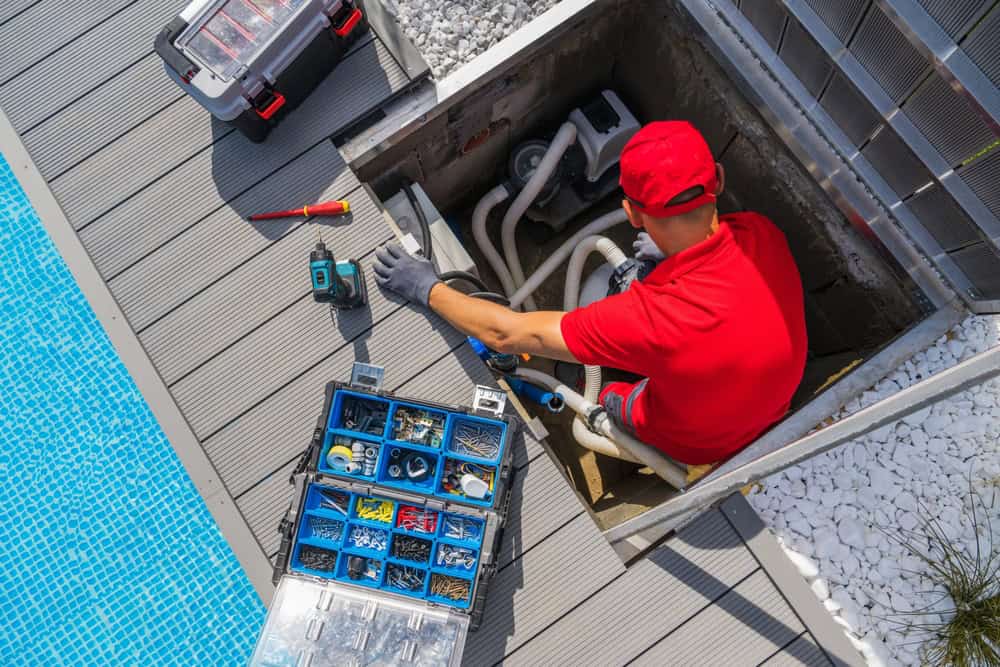
A failing pump doesn’t always announce itself dramatically. It usually gives you weeks of subtle signals before it causes a visible water quality problem — and by the time algae shows up, most homeowners don’t connect the two.
The most common early signs are a pump that sounds different than it used to — a grinding or rattling noise, or a motor that cycles on and off more than it should. You might notice the water moving less vigorously through the returns, or a filter that seems to need cleaning more often than before because flow rate has dropped. In some cases, the pump runs but the pressure gauge reads lower than normal, which indicates the impeller or motor is no longer performing at full capacity.
What makes this particularly relevant to late summer is the compounding effect. A pump that’s running at 70 percent efficiency might be adequate in April, when water temperatures are lower and algae pressure is minimal. That same pump in August — when biological demand is at its peak, storms are crashing chemistry daily, and the water is sitting at 88 degrees — creates the exact dead zone conditions where algae takes hold within days.
We see this pattern regularly in Broward County pools, particularly in established neighborhoods like Plantation and Davie where older equipment hasn’t been updated in several years. The pump isn’t broken in any obvious way. It’s just no longer doing the job the pool needs in peak summer conditions. A professional inspection catches the capacity issue before it becomes a green pool recovery situation — which is significantly more involved and disruptive than a pump repair.
If your pool has been fighting algae all summer despite reasonable chemistry, and especially if you’ve noticed any change in how the pump sounds or how water moves through the system, that equipment deserves a closer look before you add another bag of shock.
There’s a real difference between a pool service that shows up, skims the surface, drops in a chlorine tablet, and leaves — and one that’s actually managing your pool’s chemistry against Broward County’s specific summer conditions. That difference becomes most visible in August and September.
Our pool maintenance in South Florida’s late-summer window means testing water chemistry with photometric equipment, not test strips. Test strips have a margin of error of 20 to 40 parts per million — which is the difference between a pool that’s protected and one that’s a day away from turning green. Photometric testing is accurate to within 2 ppm. That precision matters when you’re managing chlorine and CYA ratios in 88-degree water after a week of afternoon storms.
It also means checking phosphate levels, not just chlorine and pH. It means looking at CYA accumulation as the season progresses and flagging when levels are approaching the threshold where shock treatment stops being effective. It means running through a post-storm protocol after significant weather events — not waiting until the next scheduled visit to find out what the storm did to your water.
We hold the Certified Pool/Spa Operator (CPO) certification, which is the same professional standard Florida requires for commercial pool operators — hotels, condos, apartment complexes. That credential exists because managing pool water chemistry in South Florida’s climate is genuinely technical work. It’s not about adding chemicals by eye or following a weekly routine regardless of what the weather did. It’s about reading what’s actually happening in the water and responding to it.
For Broward County homeowners — whether you’re in a screened enclosure in Coral Springs, a waterfront property in Fort Lauderdale, or a newer saltwater pool in Weston — the goal is the same: a pool that’s consistently clear, safe, and ready to use without you having to think about it. That only happens when the service behind it is actually paying attention to what South Florida summer is doing to your water every single week.
Late summer doesn’t have to mean a green pool, a wasted weekend, and another run to the hardware store for shock that may not even work. But staying ahead of it requires understanding what’s actually driving the problem — the CYA buildup, the phosphate-loaded stormwater, the pump that’s quietly losing ground — not just treating the symptom after it shows up.
The good news is that all of this is manageable with consistent, informed pool maintenance. Catching a CYA problem in July is straightforward. Catching it in September after three algae treatments is a much bigger conversation.
If your pool has been giving you trouble this summer, or if you just want to make sure it’s genuinely protected before the worst of the season hits, we’re here to take a look. DCP Pool Services serves homeowners across Broward County with the kind of professional, attentive pool care that actually keeps up with what South Florida summer demands. Reach out and let’s talk about what your pool needs.
Article details:
Share:
Continue learning: