Going green with your pool doesn't mean sacrificing clean, safe water. Here's what actually works for Broward County homeowners this season.
Share:
Summary:
If your pool is costing you more than it used to — in chemicals, in electricity, or in time — you’re not imagining it. Broward County’s heat, humidity, and near-daily summer storms make pool maintenance genuinely demanding. Chlorine breaks down faster here than almost anywhere else in the country. Algae moves in quickly. And a lot of pool owners end up overcompensating with chemicals that irritate skin, sting eyes, and still don’t fully solve the problem. There’s a smarter approach, and it doesn’t require starting from scratch. Here’s what eco-friendly pool maintenance actually looks like in practice — and why it works especially well in South Florida.
“Eco-friendly pool” gets thrown around a lot, but it doesn’t mean ditching chemicals entirely or letting your pool run on good intentions. It means using fewer chemicals by using them more precisely, supplementing with systems that do more of the heavy lifting, and making equipment choices that reduce energy waste. The goal is a pool that’s just as clean and safe — but maintained with less chemical input and lower operating costs.
In practice, this looks like a combination of things: calibrated chemical balancing instead of guesswork dosing, supplemental sanitization systems that reduce how hard chlorine has to work, and equipment upgrades that cut energy consumption without cutting performance. None of it is complicated, but it does require knowing what you’re working with — which is where professional pool maintenance makes a real difference.
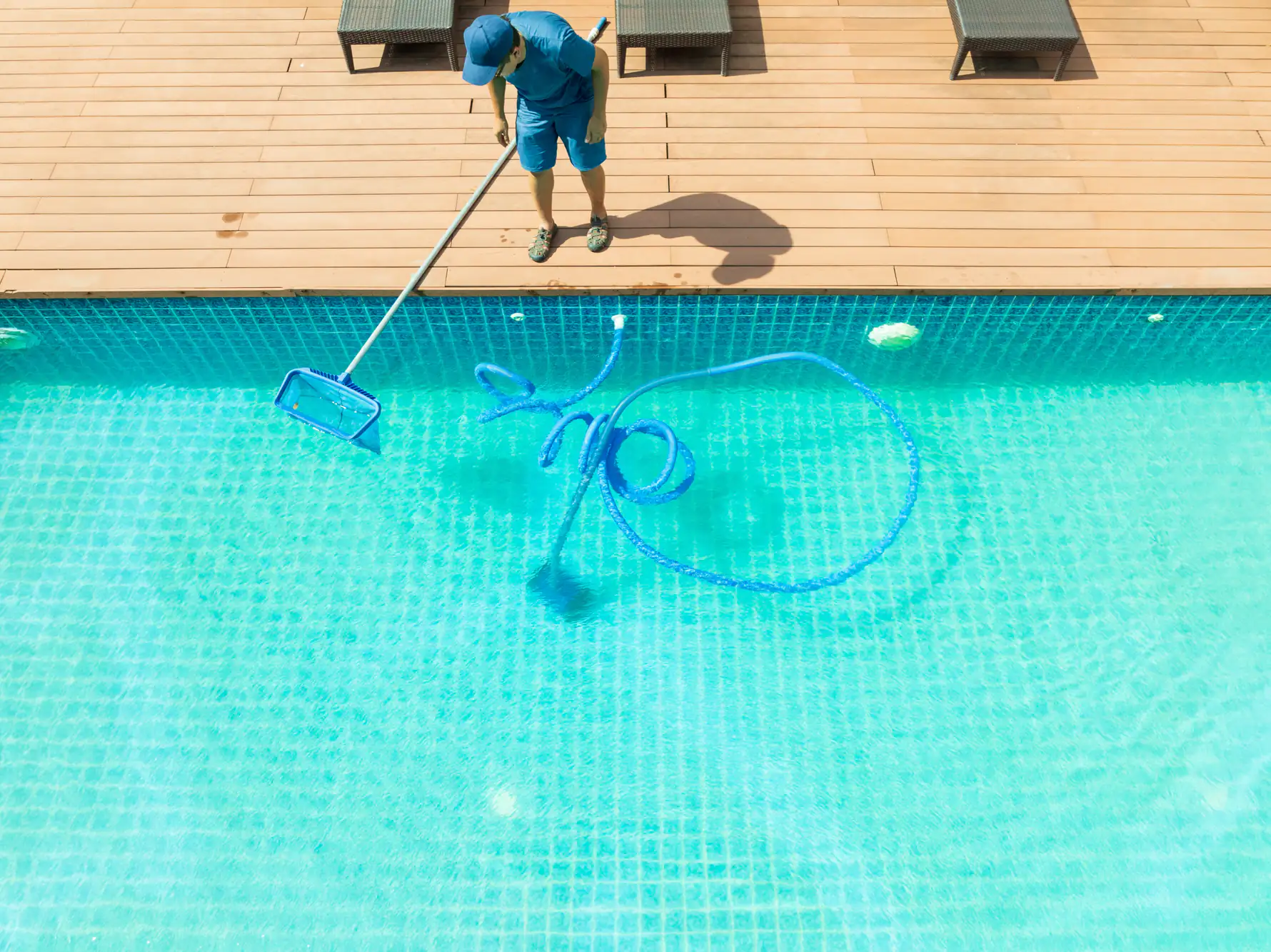
South Florida’s climate is genuinely tough on pool chemistry. From May through October, Broward County gets afternoon thunderstorms almost daily. Every time it rains heavily, your pool’s chemical balance shifts — pH swings, chlorine dilutes, and organic matter enters the water. If no one’s testing and adjusting consistently, you end up chasing the problem with larger and larger doses of chemicals that could have been avoided with regular maintenance.
Then there’s the UV factor. Fort Lauderdale’s UV index regularly hits 10 or 11 during summer — classified as extreme. Chlorine degrades rapidly under that kind of sun exposure. Pool owners who don’t account for this end up adding more chlorine more often, which drives up costs and increases the concentration of chloramines in the water.
Chloramines are worth understanding because they’re widely misunderstood. That strong “pool smell” most people associate with chlorine? It’s not actually chlorine — it’s chloramines, which form when chlorine reacts with organic matter like sweat, sunscreen, and other contaminants. Red eyes, skin irritation, and that chemical odor are all signs of chloramine buildup, not signs that the pool is clean. A pool with a strong chemical smell often needs better water management, not more chlorine.
The fix isn’t always adding more — it’s adding smarter. When pool chemistry is tested and adjusted consistently by someone who knows what they’re looking for, the overall chemical load drops significantly. That’s the foundation of eco-friendly pool maintenance: precision over volume.
Beyond better chemical management, there are a few equipment upgrades that make a measurable difference — and in Broward County’s year-round pool climate, the return on investment is faster than almost anywhere else.
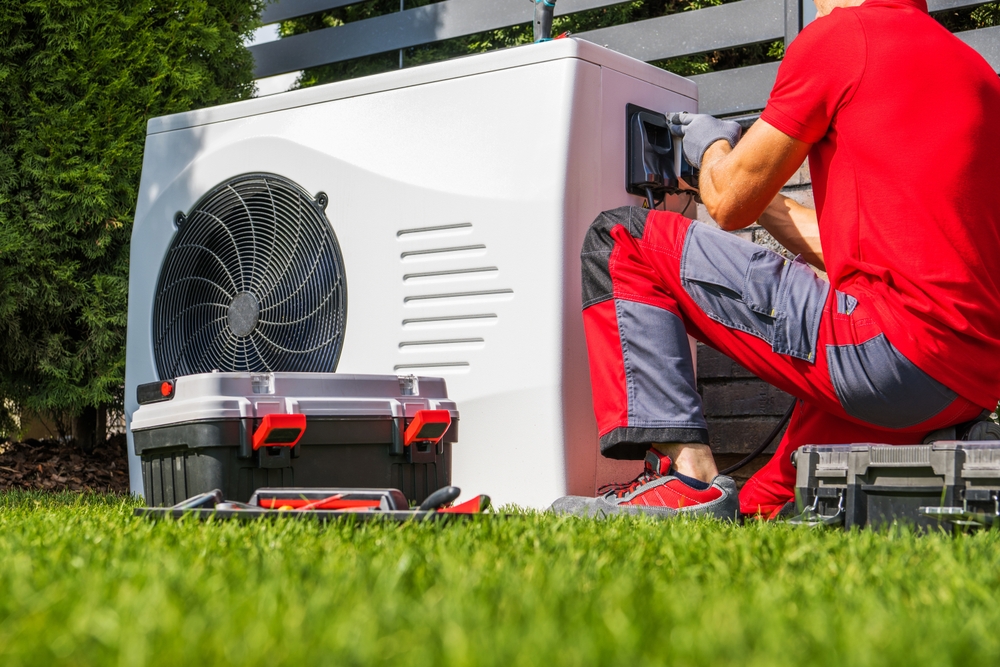
Variable-speed pool pumps are the most impactful upgrade most pool owners can make. A standard single-speed pump running eight hours a day can cost between $890 and $1,200 per year in electricity alone. Variable-speed models consume up to 80% less energy by adjusting their speed based on what’s actually needed. The U.S. Department of Energy puts the annual savings at roughly $695 for a typical Florida pool, with most pumps paying for themselves within 18 to 24 months. Since Florida pool owners run their pumps year-round — not just in summer — the payback timeline here is shorter than in most other states.
Pool ozone systems are another option worth knowing about. Ozone is a powerful oxidizer that breaks down bacteria and algae at the cellular level, handling a significant portion of the sanitization work that chlorine would otherwise need to do alone. DEL Ozone’s industry data shows that ozone systems can reduce chlorine consumption by 60 to 90%, depending on the pool. The ozone itself breaks down into oxygen, leaving no chemical residue in the water or the environment. It integrates with your existing circulation system — no full rebuild required.
UV sanitization systems work on a similar principle, using ultraviolet light to destroy pathogens that chlorine sometimes struggles with, including chlorine-resistant microorganisms like Cryptosporidium. Used alongside chlorine, UV systems allow you to maintain safe water quality at lower chemical concentrations. And for pool owners considering a saltwater system, that’s a conversion we handle regularly — saltwater generators produce chlorine on-site from salt at low, consistent levels, which means more stable chemistry, less frequent chemical purchasing, and water that’s noticeably gentler on skin and eyes.
Even something as simple as a solar pool cover makes a real difference. Covers reduce water evaporation by up to 95%, which matters because every gallon that evaporates takes dissolved chemicals with it — chemicals you then have to replace. Less evaporation means lower chemical demand and lower water bills.
Want live answers?
Connect with a DCP Pool Services expert for fast, friendly support.
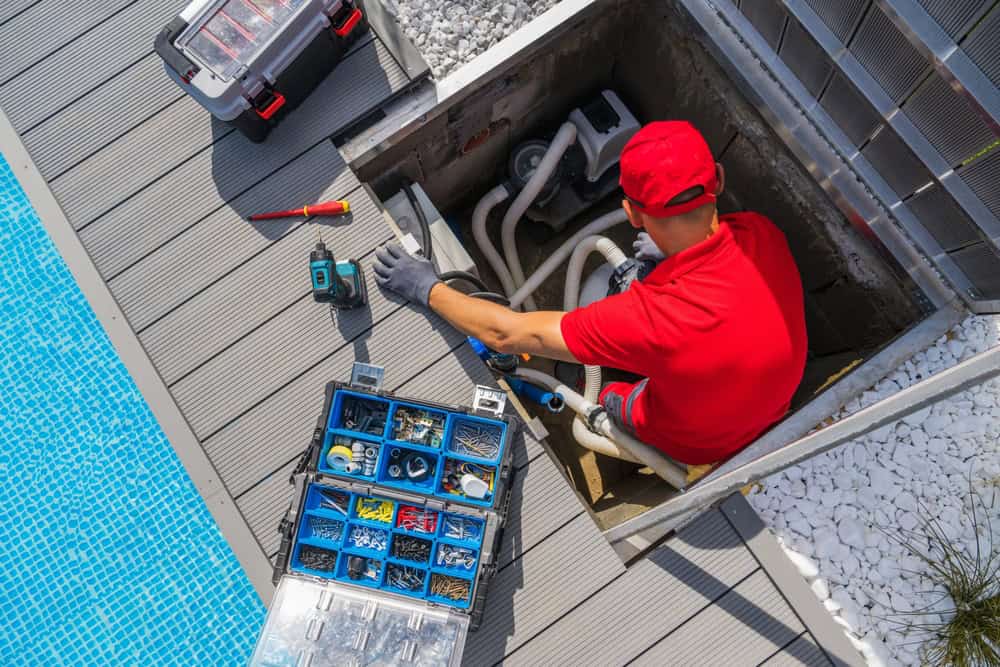
Eco-friendly pool maintenance starts with equipment that’s actually working correctly. A pump that’s struggling, a filter that’s overdue for service, or a saltwater generator with a failing cell — these aren’t just inconveniences. They force the rest of your pool’s systems to work harder, which means more chemical use, more energy consumption, and more wear on everything else.
We handle pool pump repair regularly across Broward County, from Coral Springs and Weston down to Hollywood and Hallandale Beach. Pumps that run constantly without variable-speed control, motors that are starting to fail, and automation systems that aren’t programmed correctly all contribute to higher operating costs and less stable water chemistry. Getting the equipment right is the single fastest way to reduce both your pool’s chemical load and its energy footprint.
Pool pumps don’t usually fail all at once. They give signals first — and catching them early is the difference between a straightforward repair and a full replacement on an urgent timeline.
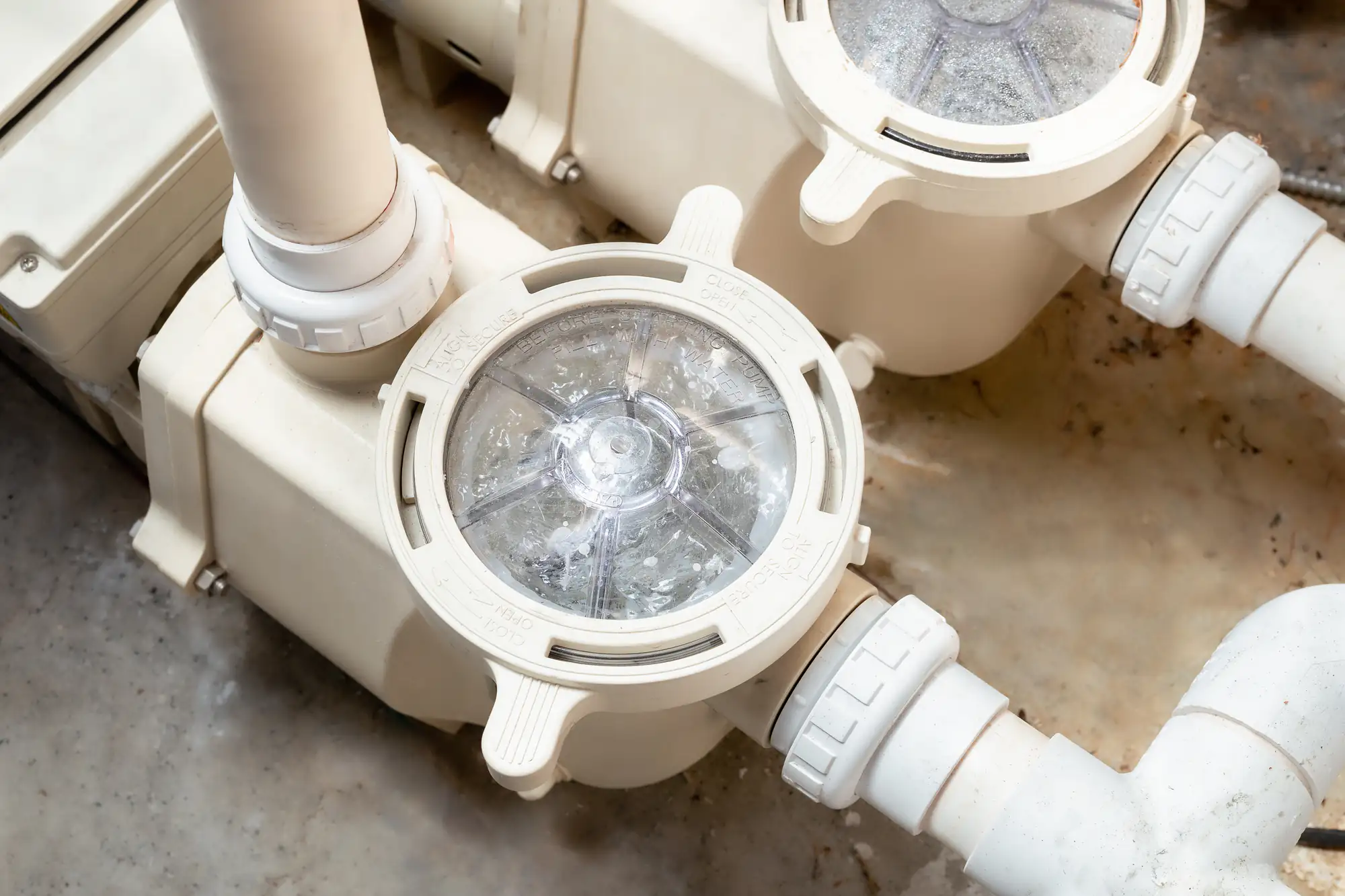
The most common signs are noise and performance changes. A pump that suddenly sounds louder than usual, or that’s making grinding, screeching, or rattling sounds, is telling you something is wrong internally — often with the motor bearings or impeller. A pump that’s running but not moving water effectively, or that’s losing prime frequently, usually points to a suction issue, a clogged impeller, or a failing seal. Either way, running a compromised pump doesn’t just risk total failure — it reduces circulation efficiency, which means your chemicals aren’t distributing properly and your filtration is suffering.
In Broward County’s coastal communities — Deerfield Beach, Pompano Beach, Fort Lauderdale, and areas near the Intracoastal — salt air accelerates corrosion on pool equipment. Pumps and motors in these areas tend to show wear faster than those further inland, which makes regular inspection especially important. We’ve seen motors in beachside homes fail years ahead of schedule simply because they weren’t being checked and protected consistently.
When we evaluate a pump, we’re looking at the motor’s electrical draw, the impeller condition, seal integrity, and whether the unit is appropriately sized for the pool and the filtration system it’s running. Oversized or undersized pumps are more common than people realize, and both cause problems — an oversized pump wastes energy and can damage filters; an undersized one can’t maintain adequate circulation, which contributes to algae growth and chemical imbalance. If a repair makes sense, we repair it. If replacement is the better call — especially when upgrading to a variable-speed model — we’ll tell you that clearly, with upfront pricing before any work begins.
A few questions come up consistently when we talk to pool owners across Pembroke Pines, Plantation, Davie, and the rest of Broward County. They’re worth addressing directly.
One of the most common is: “If my pool looks clear, is it safe?” Not necessarily. A visually clear pool can still have pH levels that are out of range, chloramine concentrations that irritate swimmers, or pathogen levels that aren’t where they should be. Clarity is a cosmetic indicator, not a chemical one. The only way to know your pool is actually safe is to test the water accurately and regularly — not with a glance, and not with a basic test strip alone.
Another one we hear often is: “Will eco-friendly pool maintenance cost more?” For the ongoing service itself, no — professional chemical balancing done correctly typically uses fewer chemicals than reactive, inconsistent dosing, which brings costs down. For equipment upgrades like variable-speed pumps or ozone systems, there’s an upfront cost, but the payback period in Broward County is faster than most people expect because we run our pools year-round. A pump upgrade that saves $695 annually pays for itself in under two years. That’s not an environmental argument — that’s a financial one.
People also ask whether saltwater pools require less maintenance. They require different maintenance, not less. The chemistry is more stable, which reduces the frequency of major chemical adjustments, but saltwater generators need regular inspection, the cell needs periodic cleaning, and salt levels still need to be monitored. The benefit is that the day-to-day experience is gentler — on your skin, your swimsuits, your pool surfaces — and the chemical purchasing costs drop significantly over time. We handle saltwater system installation and ongoing maintenance across Broward County, and it’s one of the upgrades we most commonly recommend for families with young children or anyone who spends significant time in the water.
Finally: “How often does a Broward County pool actually need professional service?” Given the climate here — the UV intensity, the rainy season, the algae risk — weekly professional maintenance is the standard for a reason. Pools in South Florida don’t get a break the way pools in northern states do. They’re running year-round, exposed to extreme sun, and regularly challenged by storm activity. Skipping visits doesn’t save money; it builds up problems that cost more to fix.
Going green with your pool isn’t about making sacrifices. It’s about maintaining clean, safe water more efficiently — with less chemical waste, lower energy costs, and a swimming experience that’s actually better for your family. In a climate like Broward County’s, where pools work hard all year long, the right approach to pool maintenance makes a noticeable difference in both cost and quality.
We work with homeowners across Broward County — from Coral Springs and Weston to Hollywood and everywhere in between. We hold the CPO certification, offer upfront pricing, and back every job with a satisfaction guarantee. Reach out when you’re ready to talk about what a greener, better-maintained pool looks like for you.
Article details:
Share:
Continue learning: